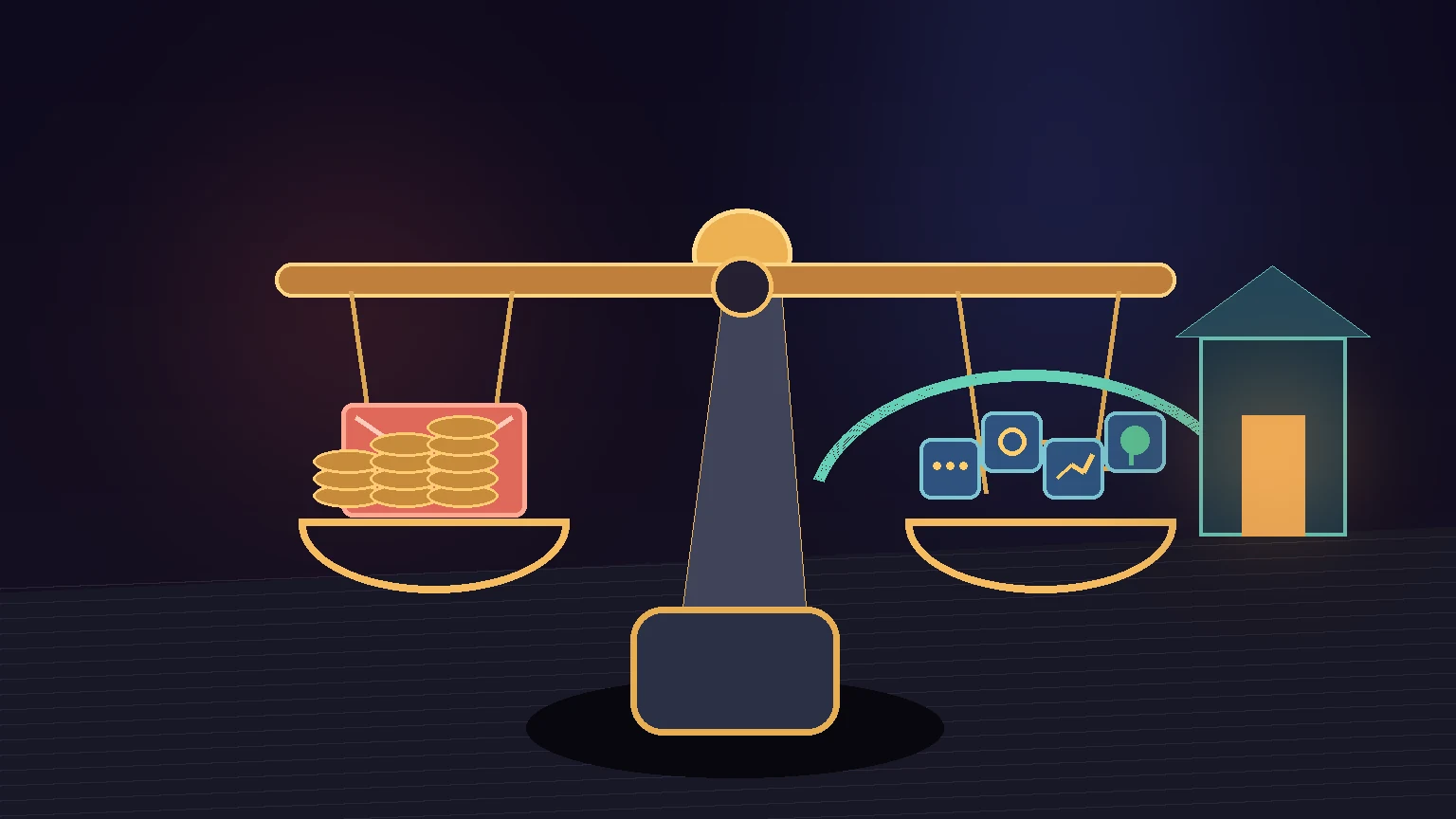
The Service Should Produce a Fix List, Not Fog
Answer engine optimization services should help your business become easier to find, understand, trust, cite, recommend, and contact when buyers use AI-assisted search. That is the job. Not a weekly report that says your “GEO score” moved from 41 to 43 while everyone pretends that means revenue is hiding behind the next login screen.
The owner question is more direct: if a customer asks ChatGPT, Google AI features, Perplexity, Gemini, or Bing who to trust, does your business have enough accessible evidence to be included? If not, what needs to be fixed first so you stop losing customers you should have had a shot at winning?
That is where AEO services can be valuable. The right provider turns messy visibility problems into specific actions: unblock pages, clarify services, improve proof, answer buyer questions, strengthen source signals, and measure whether the answer environment improves. The wrong provider sells acronyms with a garnish of dashboard confetti.
Why This Buying Decision Got More Complicated
Search used to feel more linear. A buyer searched, clicked a result, skimmed a few pages, maybe called. It was never that clean, but at least the story fit on a napkin.
Now a buyer may ask an AI system for a shortlist, compare answers, check reviews, skim a source, and contact one company without visiting every website. Google’s AI features guidance still points site owners back to Search fundamentals: make useful, accessible content eligible for Search and AI experiences rather than chasing a separate AI-only switch (https://developers.google.com/search/docs/appearance/ai-features). Bing’s Webmaster Guidelines still emphasize crawlability, relevance, quality, and trust (https://www.bing.com/webmasters/help/webmaster-guidelines-30fba23a). OpenAI also publishes crawler documentation for site owners, including how its bots may access content (https://platform.openai.com/docs/bots).

The practical takeaway is not “SEO is dead.” Please do not let that phrase near a proposal. The job changed from only ranking pages to making the business recommendation-ready across the sources AI systems can retrieve, summarize, and cite.
What Answer Engine Optimization Services Should Include
Good answer engine optimization services start with diagnosis. Before anyone recommends twenty new blog posts, they should know which buyer questions matter, which competitors appear, which sources get cited, which pages are inaccessible or weak, and where the business loses trust.
A serious AEO engagement should include five pieces.
- Buyer-question mapping: Identify the prompts and search queries tied to revenue, not vanity phrases that make reports look productive.
- Technical access review: Check robots.txt, noindex directives, canonicals, sitemap quality, renderability, CDN rules, and bot-management settings that could hide important pages.
- Content and extraction audit: Inspect whether service pages answer buyer questions clearly enough for humans and machines to understand without archaeological effort.
- Proof and source analysis: Review third-party mentions, reviews, local profiles, directories, partner pages, case evidence, and citations that support or weaken trust.
- Outcome measurement: Track visibility changes alongside calls, forms, qualified leads, branded searches, and assisted conversions where the data allows.
Notice what is missing: a promise that ChatGPT will recommend you next Tuesday. Nobody controls that. Anyone selling guaranteed AI recommendations is either confused, overconfident, or wearing a very expensive red flag.
The Work Is Usually Less Exotic Than the Sales Pitch
Most AEO fixes are not mystical. They are annoyingly practical.
A local service business may need clearer location pages, consistent business details, better review language, crawlable service information, stronger before-and-after proof, and direct answers to cost, timing, warranty, and qualification questions. A B2B company may need comparison pages, proof of expertise, named use cases, stronger author and organization signals, and cleaner explanations of who the offer is not for.
Google’s guidance on creating helpful content says pages should be made for people first, provide original value, and avoid content created mainly to manipulate rankings (https://developers.google.com/search/docs/fundamentals/creating-helpful-content). That sounds like a search guideline because it is. It is also a conversion guideline wearing sensible shoes.

The same improvements that help AI systems understand a business often help buyers make a decision. Clear service pages reduce sales friction. Good FAQs handle objections before the call. Strong proof makes claims less lonely. Technical access ensures the good work can actually be found. Revolutionary? No. Revenue-adjacent? Very.
Red Flags When Hiring an AEO Provider
Owners do not need to become AI search technicians before hiring help. But they should know enough to avoid buying a decorative mystery box.
Watch for these red flags:
- The provider sells a single “AI visibility score” without showing prompts, sources, competitors, dates, and repeatability limits.
- Every recommendation is “publish more content,” even when service pages, reviews, or technical access are the real blockers.
- The provider treats schema, llms.txt, or crawler settings as magic switches rather than supporting pieces.
- Reports mention AI citations but never connect the work to leads, calls, forms, sales conversations, or revenue.
- They cannot explain which AI/search surfaces they tested or why those tests match buyer behavior.
- They guarantee specific rankings, citations, recommendations, or revenue from AI systems.
- The strategy ignores third-party proof because improving your actual reputation is harder than making another chart.
Schema can help machines understand what a page describes when it matches the visible content. Useful? Yes. A guaranteed citation machine? No. If schema alone produced AI visibility, every plugin company would be building a private island by now.
What You Should Expect to Receive
A good AEO services deliverable should be boring in the best possible way: clear findings, evidence, priority, and next steps.
You should see which buyer questions were tested, where your business appeared or disappeared, which competitors were named, which sources were used, which pages were weak or blocked, and which fixes have the highest business value. The recommendations should separate urgent revenue blockers from nice-to-have cleanup.
For example, “create more content” is not a useful recommendation by itself. “Rewrite the emergency service page so it answers pricing, response time, service area, proof, and next steps; then add internal links from the location pages and verify crawl access” is useful. One is fog. The other can be assigned to a person with a calendar.

A Simple Evaluation Framework
Before hiring an answer engine optimization services provider, ask five questions.
- What buyer questions will you test, and why do they matter to revenue?
- Which systems and search surfaces will you inspect?
- How will you separate a vanity mention from a recommendation that could influence a customer?
- What technical, content, proof, and conversion issues will you audit?
- What will I receive that my team can actually fix?
If the answers are vague, keep your card in your wallet. Vague strategy gets expensive because it creates work without direction.
The better path is diagnosis first, implementation second, measurement third. That order matters. Otherwise you end up optimizing the wrong pages, tracking the wrong prompts, and celebrating the wrong chart. Marketing already has enough ways to waste a Tuesday.
The Nugentive View
Answer engine optimization services are not about tricking ChatGPT or chasing a new acronym every time the industry gets bored. They are about making your business retrievable, understandable, trusted, cited, and recommended across the places buyers now use to make decisions.
For owners, the business outcome is simple: more qualified customers finding you, fewer easy-fit buyers choosing competitors because your evidence was thin, and less money spent guessing what to fix.
Nugentive’s AI Visibility Audit is built around that practical sequence. We inspect where your business is losing discoverability, trust, citations, recommendations, or conversions across search and AI-assisted paths, then turn the findings into a prioritized fix list.
If you are considering AEO services, start with the provider who can show the blockers. The acronyms can wait in the lobby.