The Click Is Not the Customer
Website lead generation gets expensive when every visit has to be rented. Paid search can be useful. Sometimes it is the right move. But if your whole customer acquisition plan depends on buying the next click, you are not building a marketing asset. You are feeding a meter.
In Nugentive’s validated keyword research captured on 2026-07-30, DataForSEO estimated the U.S. cost per click for ai visibility audit at $62.08 and ai seo services at $78.77. That is not a booked call. Not a qualified lead. Not a customer who brings snacks and pays invoices on time. A click.
At $62.08 per click, 10 clicks imply $620.80, 50 clicks imply $3,104.00, and 100 clicks imply $6,208.00 before conversion rate, sales quality, follow-up speed, or actual revenue enter the room. This does not mean ads are bad. It means the math deserves to be in the room before the credit card is.
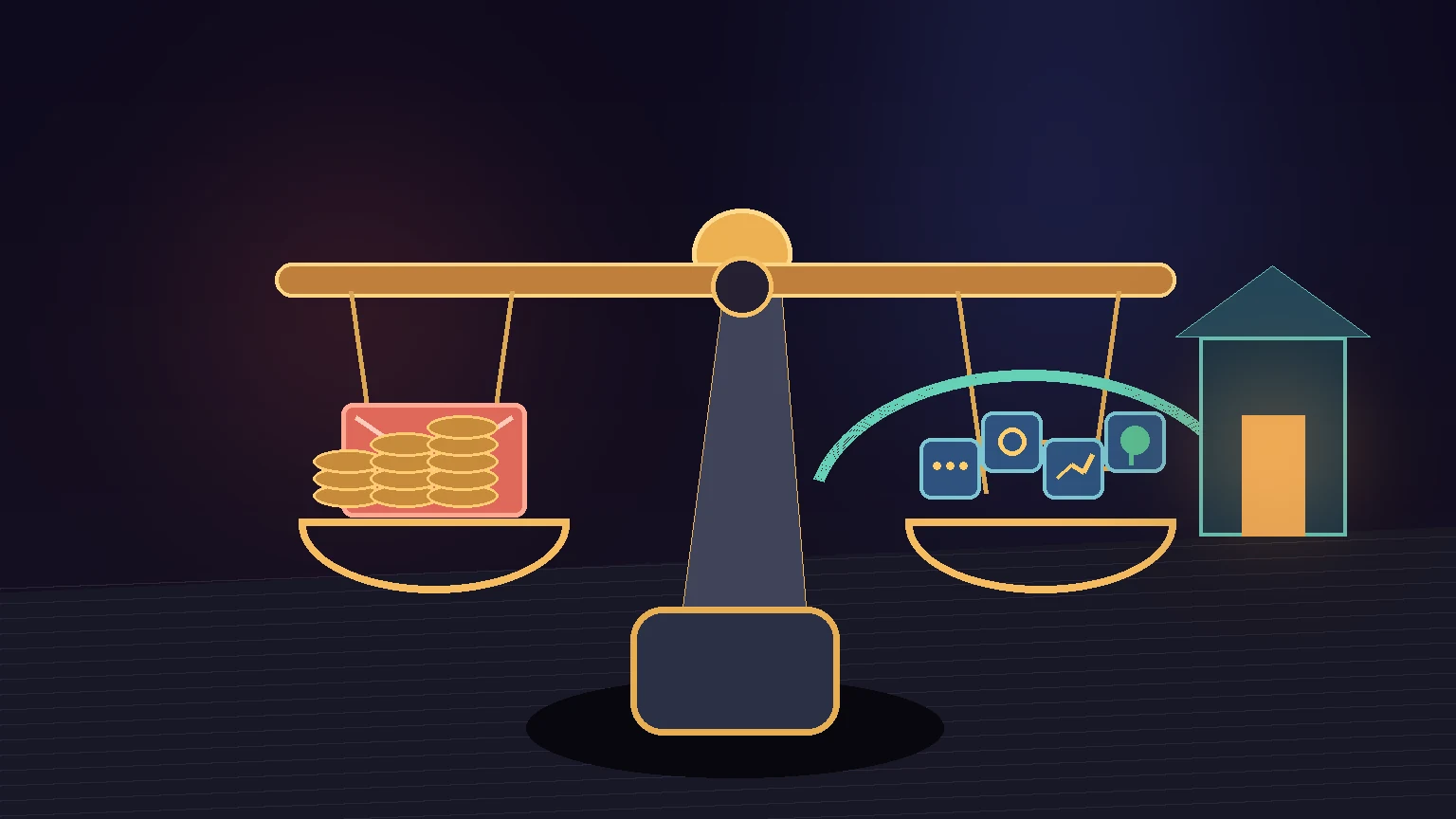
The better owner question is simple: are you only buying traffic, or are you also building pages, proof, and visibility that can keep helping customers find and trust you after this month’s ad budget is gone?
Why Paid Clicks Feel Clean Until They Don’t
Paid ads are attractive because they are measurable quickly. You set a budget, choose targeting, write ads, send visitors to a landing page, and watch the dashboard move. Google’s own Ads help documentation frames budgets as a way to control spend, with daily budgets and campaign settings shaping delivery (https://support.google.com/google-ads/answer/2375454). That control is useful.
The problem is not that paid ads cost money. Everything worthwhile costs money, including ignoring the problem until next quarter. The problem is that paid traffic has a recurring marginal cost. When you stop paying, the click flow usually stops. If the landing page is weak, the offer is vague, the proof is thin, or the follow-up is slow, you can buy your way into discovering those problems at market price.

That is where website lead generation becomes less about “more traffic” and more about the quality of the path. A $78.77 click to a page that clearly explains the service, answers objections, and shows proof is one thing. The same click to a vague page that says “innovative solutions” is an expensive personality test for your homepage.
Organic Search Is Not Free. It Is an Asset.
Organic search, SEO, AEO, and AI visibility are not free alternatives to ads. Let’s kill that fantasy before it gets a proposal template. Research costs money. Strategy costs money. Writing good pages costs money. Technical fixes, internal links, schema, page speed, proof assets, reviews, and ongoing updates cost money.
The difference is how the cost behaves. Paid acquisition rents attention one click at a time. Organic visibility builds assets that can keep working across Google Search, AI-assisted answers, referrals, branded searches, and buyer research. Google’s helpful content guidance says content should be created for people first and provide genuine value, not exist mainly to manipulate rankings (https://developers.google.com/search/docs/fundamentals/creating-helpful-content). That is also good business advice.

A useful service page can answer “what do you do, who is it for, what does it cost, what happens next, why trust you, and when should I not buy this?” A strong comparison page can help a buyer choose between options. A practical FAQ can remove friction before the sales call. A case study can make the business feel real. A technical accessibility fix can allow search engines and relevant AI systems to retrieve what was already there but effectively invisible.
None of those assets guarantee rankings, AI citations, or revenue. But they give your business a chance to be found and evaluated without paying a new toll for every single visit.
The Website Lead Generation Cost Stack
Owners often compare “ad spend” against “SEO spend” as if those are the only two numbers. That comparison is too thin. The real question is total cost to acquire a qualified customer over a useful time horizon.
For paid ads, count:
- Click cost by keyword and market.
- Landing page creation or improvement.
- Tracking setup and call attribution.
- Creative testing and campaign management.
- Lead qualification time.
- Wasted spend from irrelevant clicks.
- The monthly cost of keeping traffic turned on.
For SEO, AEO, and organic website lead generation, count:
- Keyword and customer-language research.
- Content strategy and page creation.
- Technical fixes that improve crawlability and usability.
- Internal linking and site structure.
- Reviews, citations, third-party proof, and trust signals.
- Content refreshes as the market changes.
- Measurement tied to calls, forms, quotes, and revenue.
This is why “SEO is cheaper than ads” is not automatically true. A poorly chosen organic campaign can waste money for months. A well-run ad campaign can prove demand quickly. The useful comparison is not moral. It is economic.
When Ads Still Make Sense
Ads still make sense when you need speed, testing, or controlled demand capture. If you are launching a new service, entering a new market, testing offers, or filling a short-term capacity gap, paid search can give you signal faster than organic work. Google Ads documentation also gives advertisers controls for budgets and campaign settings, which matters when the goal is measured testing rather than vague hope with a login screen (https://support.google.com/google-ads/answer/2615875).
The mistake is using ads to compensate forever for pages that do not explain the business. Paid campaigns can expose weak messaging, weak proof, bad conversion paths, and confused positioning. They do not magically fix them.
Use ads when:
- You need demand data quickly.
- You can track lead quality, not just form fills.
- Your landing page is strong enough to deserve traffic.
- You know the acceptable cost per qualified lead or sale.
- You are willing to turn off campaigns that fail the math.
Do not use ads as a substitute for making the business clear. That is like paying people to visit a store with no signs, then blaming foot traffic for being unmotivated.
The Break-Even Question Owners Should Ask
A practical website lead generation decision starts with break-even math, not channel loyalty. If a click costs $62.08, how many clicks does it take to get one qualified inquiry? How many inquiries become sales? What is a new customer worth? How long do they stay? How fast do you need results?
Then ask the asset question: what page, proof, technical fix, or content upgrade could reduce dependency on paid clicks over the next 6 to 12 months?
For example, if a service page is vague, improving it may help both paid and organic performance. Ads convert better because the page answers objections. Organic search has a clearer page to index. AI systems have more specific information to retrieve and summarize. The same fix can support multiple discovery paths. Beautiful. Annoyingly practical.
Google’s AI features guidance tells site owners to keep following Search fundamentals: make content accessible, useful, and eligible for search features rather than chasing a separate AI-only shortcut (https://developers.google.com/search/docs/appearance/ai-features). For owners, that means the boring fundamentals are still where money gets made: clear service pages, crawlable content, strong proof, clean structure, and a next step buyers understand.
What to Build Before Buying More Clicks
Before increasing ad spend, inspect the assets that decide whether website visitors become customers. Start with the pages closest to revenue: home, service, location, pricing, comparison, proof, and contact pages. These are the pages that should help a buyer decide whether to call, book, request a quote, or leave quietly and make your analytics look mysterious.

A good first-pass audit should answer:
- Can search engines and relevant AI systems access the revenue pages?
- Do pages say exactly what you sell, who it is for, and where you operate?
- Are buyer questions answered before the contact form?
- Is there credible proof beyond “we care about quality”?
- Are reviews, citations, and third-party mentions consistent?
- Is the next step obvious on mobile and desktop?
- Can you connect inquiries back to pages, campaigns, and search behavior?
If the answer is no, more traffic may just make the leak louder.
Website lead generation should not depend on renting every visit forever. Paid ads can be useful, especially for speed and testing, but they get expensive fast when the website does not convert or when no organic asset is being built alongside them.
The smarter path is not “ads or SEO.” It is ads where they make economic sense, organic assets where they can compound, and better measurement so you know which part is actually producing customers.
Nugentive’s AI Visibility Audit is built for that decision. It finds where your business is losing discoverability, trust, citations, recommendations, or conversions across search and AI-assisted paths, then turns the mess into a prioritized fix list.
If you are about to buy another batch of expensive clicks, make sure the website is ready to turn them into customers first.