
Traffic Is Not the Prize
Website lead generation is the work of turning visitors into real inquiries, calls, bookings, or sales opportunities. Not impressions. Not a mysterious “visibility score.” Actual chances to win customers. If traffic goes up and the phone stays quiet, the website is not a growth engine. It is a very well-lit waiting room.
That matters because owners are being told to chase more channels at once: Google rankings, AI Overviews, ChatGPT mentions, local maps, paid ads, social posts, review sites, and whatever acronym escaped LinkedIn this week. More visibility can help, but only if the customer path is strong enough to convert attention into action.
Why More Visibility Still Fails
A business can be visible and still lose the customer. The page may answer too slowly, hide proof, make the next step vague, load poorly, or talk in company-centered fluff instead of buyer language. AI search makes this more obvious because a buyer may ask a detailed question before they ever visit: who is credible, who serves my area, what does this cost, what proof exists, and what should I do next?
Google’s helpful content guidance says content should be made for people first and should demonstrate useful, reliable information (https://developers.google.com/search/docs/fundamentals/creating-helpful-content). Google’s SEO starter guide still emphasizes making pages useful, clear, and accessible to search engines and people (https://developers.google.com/search/docs/fundamentals/seo-starter-guide). That is not glamorous advice. It is also the part that keeps working while tactics rotate in and out like interns with badges.
Search Console can show clicks, impressions, CTR, queries, pages, and average position for Google Search (https://support.google.com/webmasters/answer/7576553?hl=en). Useful data. But Search Console does not tell you whether your service page answered the buyer’s real objection, whether your proof was believable, or whether the call button was buried under three paragraphs of “passion.”
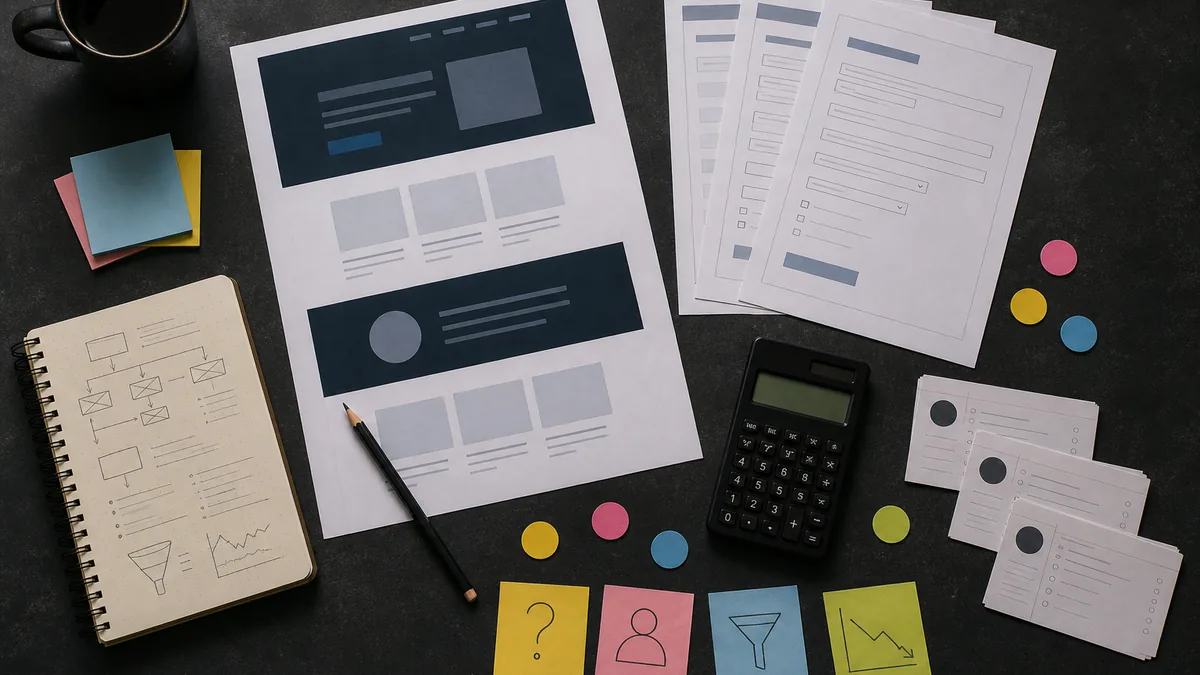
The Customer Path Test
For website lead generation, Nugentive would judge a page by the path a buyer has to travel. The path does not need to be fancy. It needs to be obvious.
1. The page matches a real buying question
A lead-generating page should own a clear question. “Emergency roof repair in Denver” is clear. “Solutions for modern property challenges” is a fog machine with a contact form. The buyer should know within a few seconds whether the page fits their problem, location, budget concern, urgency, or decision stage.
For AI visibility, this also helps machines understand when your business belongs in an answer. If the page never states who you serve, what you do, where you do it, and what problem you solve, AI systems have to infer too much. Machines are getting better at inference. That is not a reason to make them solve a crossword puzzle with your revenue attached.
2. The first screen gives the useful answer
The top of the page should answer the practical question that brought the visitor there. What is the service? Who is it for? What happens next? What proof or constraint matters? A buyer should not need to scroll past a mission statement, a stock hero image, and a paragraph about “commitment to excellence” before finding out whether you can help.
This does not mean every page needs to be blunt or ugly. It means the page should respect attention. Owners pay for traffic, content, tools, and time. Wasting the first screen is expensive politeness.
3. Proof appears before doubt wins
People do not become leads just because a page claims competence. They become leads when the claim feels safe enough to act on. Proof can include reviews, service areas, certifications, project photos, process details, warranties, pricing context, response times, case examples, or third-party mentions.
Be specific. “Trusted by homeowners” is weak. “Licensed in Alberta, 24-hour emergency calls, 380 Google reviews, photo-based triage before dispatch” is stronger. The second version gives a human and an AI system something concrete to work with.
4. The next step is low-friction
A strong page tells the visitor exactly what to do and what happens after they do it. Call now. Book an estimate. Upload photos. Request a quote. Check availability. The action should match the buyer’s urgency and risk.
If every page ends with “Contact us today” and nothing else, the visitor has to guess what happens next. Guessing is a conversion tax. Some people pay it. Many leave.

What to Fix Before Buying More Traffic
Before spending more on ads, content, or AI visibility tools, inspect the pages that should already be producing leads. Start with the pages closest to revenue.
- Service pages. Each one should explain the problem, service fit, location or scope, proof, cost drivers, timing, and next step.
- Location pages. These should show real local relevance, not city-name confetti sprinkled over duplicate copy.
- Pricing or cost pages. If buyers care about price and your site refuses to discuss it, they will ask competitors or AI systems instead.
- Comparison pages. These help buyers choose between options, methods, packages, or providers without pretending your company is perfect for everyone.
- FAQ sections. These should answer objections and buying questions, not pad schema with “What services do you offer?” six different ways.
The AI Visibility Layer
AI visibility can support website lead generation when it makes your business easier to retrieve, understand, trust, cite, and recommend. But it cannot rescue a weak offer page by magic. If the page is vague, thin, outdated, or missing proof, getting mentioned by an AI answer may only send buyers to a confusing destination faster. Congratulations, you accelerated the leak.
For AI search, the lead-generation question becomes broader:
- Can crawlers access the page?
- Does the page clearly define the entity, service, area, and best-fit customer?
- Is there enough proof for a recommendation to feel defensible?
- Do third-party sources agree with the business’s own claims?
- Does the page answer the buyer’s likely follow-up questions?
- Is the next step clear enough for a human to act immediately?
That is why lead generation and AI visibility belong in the same conversation. AI systems may shape the shortlist, but the website still has to close the confidence gap.

A Simple Lead Generation Audit
Use this quick audit before approving another campaign budget.
Check the traffic quality
Look at which pages and queries bring visitors. Separate branded, local, informational, commercial, and support intent. A traffic increase from low-intent informational queries may look nice in a report and still do very little for sales.
Check the conversion path
Open the page on mobile and desktop. Can a visitor understand the offer, see proof, and contact the business without hunting? Is the call button obvious? Does the form ask for only what is needed? Does the page explain what happens after submission?
Check the trust gap
List the reasons a buyer might hesitate. Price uncertainty, weak proof, unclear service area, slow response, no photos, no process, no reviews, confusing packages, missing credentials. Then fix the highest-risk gaps first.
Check the AI answer gap
Run a small set of real buyer questions across Google AI features, ChatGPT, Perplexity, or the tools your customers may use. Record whether your business appears, which sources are cited, whether the answer is accurate, and whether the cited page helps a buyer take the next step. Treat this as directional evidence, not prophecy carved into a tablet.
Common Mistakes
The first mistake is treating traffic as the goal. Traffic is raw material. Leads are closer to money. Customers are money.
The second mistake is making the website talk like the business instead of the buyer. Buyers want to know whether you solve the problem, serve their area, fit their situation, and can be trusted.
The third mistake is buying tools before fixing pages. AI visibility software, SEO dashboards, heatmaps, and call tracking can all help. But if the page is vague, the tool will mostly help you measure vagueness with improved confidence.
The Bottom Line
Website lead generation is not about squeezing one more form fill out of a bad page with a brighter button. It is about building a customer path that turns visibility into trust and trust into action.
Start with the pages closest to revenue. Answer the buyer’s question first. Add proof early. Make the next step obvious. Then use SEO, AEO, and AI visibility work to bring more qualified people into a path that can actually convert. If you are not sure where the path is leaking, an AI Visibility Audit can show which visibility and conversion gaps are most likely costing customers.