
The Extra Fee Needs Receipts
An AI SEO retainer cost is justified only when the scope adds measurable work: a documented baseline, a stable prompt set, technical and content diagnosis, prioritized repairs, repeat testing, and a connection to qualified customer activity. A surcharge for screenshots and a new label is not a strategy. It is the old retainer wearing a futuristic hat.
A fresh r/SEO discussion in Nugentive’s cached trend collection described an in-house marketer being asked to pay $3,000 more per month for “AI visibility” without a prompt set, dated baseline, or before-and-after evidence (https://www.reddit.com/r/SEO/comments/1wfesy7/is_8k_a_month_fair_for_ai_seo_when_nobody_can/). That post is a market signal, not proof that any named agency or price is unreasonable. It does capture the right owner question: what additional work and business evidence should an additional fee buy?

What Should an AI SEO Retainer Cost Cover?
The exact price depends on the business, number of locations or products, competitive market, prompt coverage, technical condition, content workload, and reporting frequency. A local contractor with six core services should not receive the same scope as a national ecommerce company with 40,000 products. Flat comparisons without scope are mostly invoice astrology.
Price should follow the work. A credible AI SEO engagement usually covers four jobs: establish what is happening, diagnose why it is happening, make or coordinate repairs, and measure whether the pattern changes.
1. A Reproducible Baseline
The provider should define the test before showing the result. That means recording the buyer prompts, platforms, locations, dates, accounts or browsing conditions where relevant, competitors, answer categories, and what counts as a mention, citation, recommendation, or accurate description.
Without those definitions, two monthly reports may not be comparable. Changed prompts, engines, or counting rules can produce a dramatic chart that says very little. Your P&L remains emotionally unmoved.
Ask for the baseline in a format you can retain. You should be able to see what was tested, when it was tested, and what the system returned—not merely a summary score whose recipe lives behind the vendor’s curtain.
2. Diagnosis Beyond Prompt Tracking
Prompt tracking tells you where to investigate. It does not tell you what to fix by itself. The scope should examine whether important pages are crawlable, indexable, clearly written, supported by proof, internally connected, and consistent with major third-party sources.
Google’s guidance for AI features says the same foundational SEO practices remain relevant and that pages must be indexed and eligible to appear in Google Search with a snippet to be shown as supporting links in AI features (https://developers.google.com/search/docs/appearance/ai-features). There is no special markup that makes a weak business the machine’s favorite. Annoying, but useful to know before paying someone to install ceremonial schema.
The diagnosis should connect each meaningful finding to a possible cause. If competitors appear more often, do they have clearer service pages, stronger reviews, more credible third-party mentions, better comparison content, cleaner local data, or easier crawler access? “They have a higher score” is not a cause. It is the question repeated in dashboard form.
Measurement Must Stay Comparable
AI answers vary. Search results vary too, but AI systems add more moving parts: model updates, retrieval sources, prompt wording, geography, personalization, and answer construction. That does not make measurement worthless. It makes disciplined measurement more important.
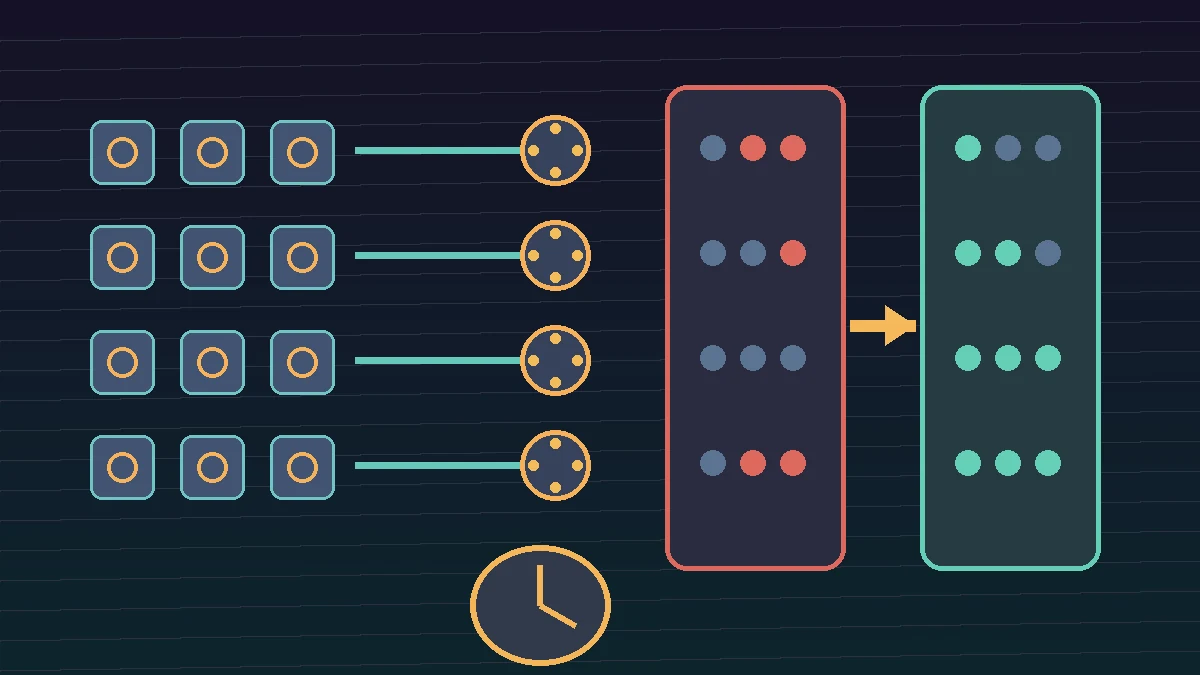
A useful retainer keeps the core test set stable while allowing clearly labeled exploratory prompts. It also separates engines rather than blending ChatGPT, Gemini, Perplexity, and Google AI features into one synthetic number. A business can improve on one surface and remain absent on another because the systems do not use identical sources or answer behavior.
Search Engine Journal reported that Google acknowledged Search Console reporting does not adequately reveal AI search positioning data (https://www.searchenginejournal.com/google-admits-search-console-reporting-for-ai-search-is-inadequate/589236/). Google’s Search Console Performance documentation describes metrics such as clicks, impressions, click-through rate, and average position for Google Search (https://support.google.com/webmasters/answer/7576553). Those metrics matter, but they do not replace a controlled record of the prompts, answers, citations, brand descriptions, and competitors seen across separate AI surfaces.
The practical reporting stack should combine several kinds of evidence:
- Visibility evidence: whether the business is mentioned, cited, accurately described, compared, or recommended for relevant buyer questions.
- Source evidence: which owned pages and third-party sources support the answers.
- Repair evidence: what technical, content, entity, review, or conversion work was completed.
- Customer evidence: changes in qualified calls, forms, bookings, sales conversations, branded demand, or assisted revenue where measurable.
No single metric proves causation. The job is to build a credible evidence chain, not nominate one dashboard as supreme ruler of marketing truth.
What Work Should Happen Between Reports?
A monthly report is not the monthly deliverable. The useful work happens between measurements.
A provider should convert findings into a prioritized queue. One month might focus on fixing crawler access and clarifying two revenue pages. Another might strengthen proof around a high-value service, reconcile inconsistent business details, build an honest comparison resource, improve internal links, or help earn credible outside coverage.
Each item should include the affected customer question, evidence behind the recommendation, owner or implementer, expected business effect, and the next measurement date. This keeps the program from collapsing into “publish more content,” the traditional refuge of a scope that has run out of ideas.
Implementation responsibility also needs to be explicit. Does the retainer include writing and development, or only recommendations? Who updates profiles? Who requests and reviews new proof? Who approves claims? A lower fee for diagnosis only may be reasonable. A larger fee may be reasonable when it includes skilled implementation. The problem is not price by itself. The problem is paying implementation money for observation-only work.
A Simple Value Test Before You Sign
Evaluate the retainer against a defined commercial area rather than the entire internet. Choose one important service, product group, location, or buyer segment. Then ask the provider to explain the following before work begins:
- Which customer questions will be tested, and why do they matter to revenue?
- Which AI and search surfaces will be measured separately?
- What is the baseline, and will you receive the underlying dated evidence?
- Which technical, content, proof, and source gaps will be diagnosed?
- What implementation is included, excluded, or dependent on your team?
- How will findings become prioritized repairs rather than recurring screenshots?
- Which customer actions will be watched alongside visibility?
- When will the program be reviewed, changed, expanded, or stopped?
A good provider should also explain uncertainty. They cannot guarantee a citation or recommendation. They can control the quality of the audit, testing discipline, implementation, documentation, and strategic decisions. If the sales pitch promises certainty from systems the provider does not control, the pricing discussion has already become the least interesting problem.
When a Higher Retainer Can Make Sense
A higher fee can be sensible when the provider is handling a substantial, transparent workload across technical access, research, content, digital PR or authority development, local data, analytics, conversion paths, and repeated measurement. It can also make sense in a competitive market where one qualified customer is valuable and the current visibility gaps affect several revenue lines.
The fee should still be tested against opportunity and capacity. If the business cannot answer leads, fulfill more work, approve changes, or provide subject-matter evidence, an ambitious retainer may mostly create a very organized backlog. Fixing operational constraints first is not anti-growth. It is how growth avoids falling down the stairs.
A smaller diagnostic engagement may be the better starting point when the business does not yet know where the problem sits. Find the access, clarity, proof, source, and conversion gaps before committing to months of production.

Pay for Decisions and Repairs, Not Theater
An AI SEO retainer cost should buy accountable work, preserved evidence, and a clearer path from customer question to qualified action. It should show what was tested, what changed, what was fixed, what remained uncertain, and what the business should do next.
Do not judge the engagement by whether a dashboard number rose once. Judge whether the testing stayed comparable, the provider found causes instead of symptoms, repairs reached important customer paths, and the business gained better evidence about what helps people find, trust, and choose it.
If you are being asked to fund a larger AI search program without that baseline, an AI Visibility Audit can establish the practical gaps and priorities first. The goal is not to make AI SEO look busy. The goal is to stop paying for ambiguity and start investing in work that can earn more qualified customers.