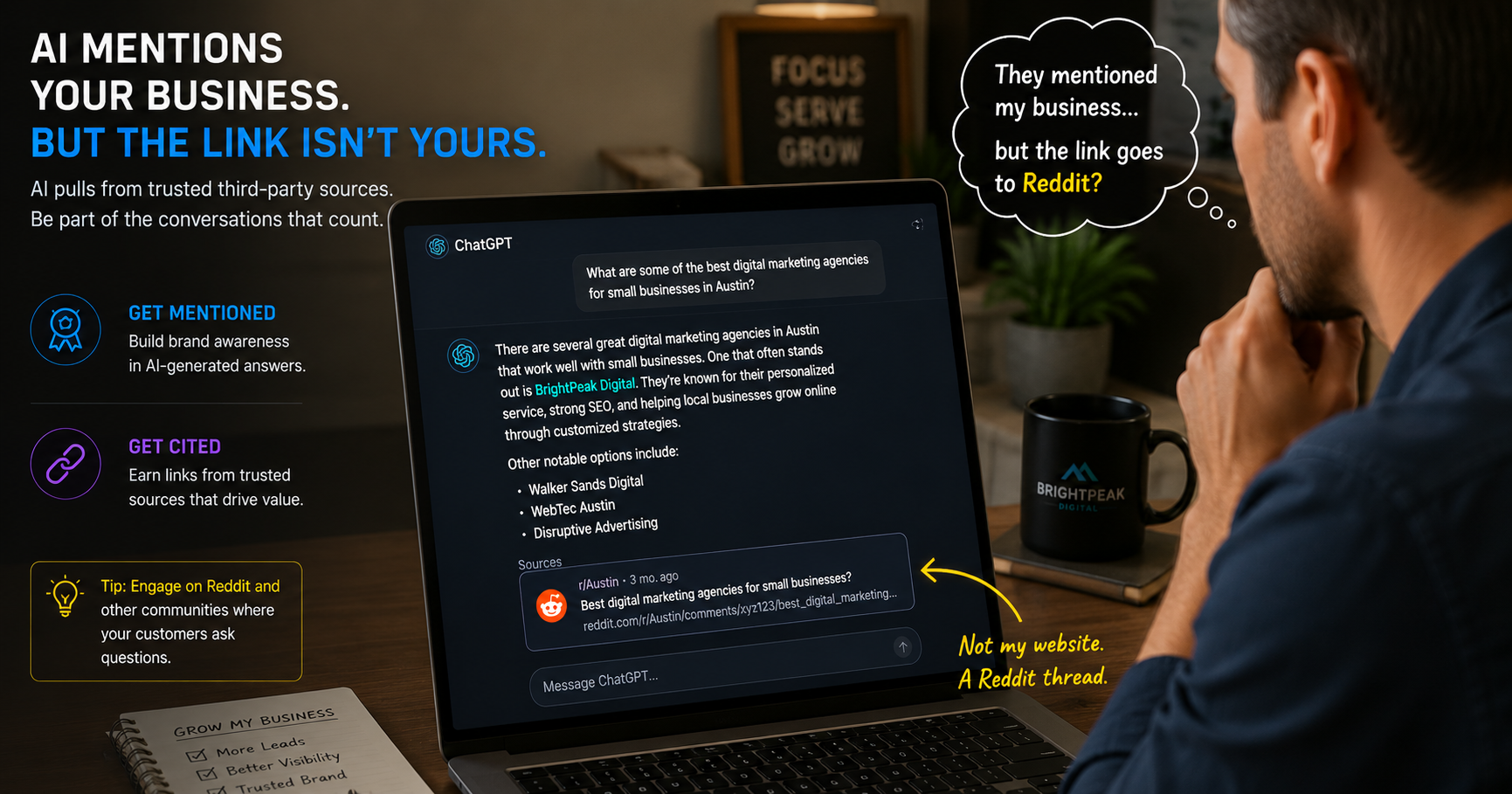
Reddit is now one of the biggest reasons AI assistants recommend one location over another, and most multi-location businesses have no idea it is happening.
A recent industry session covered by Search Engine Journal put a number on it: roughly one in every five off-page citations behind AI search answers now traces back to Reddit, and that share is growing about 30 percent year over year (https://www.searchenginejournal.com/ai-search-cites-reddit-5-proven-plays-to-boost-multi-location-visibility-recap/582568/). The session, run by Uberall and Reddit, also reported that when someone asks ChatGPT, Gemini, or Perplexity a category question, the model typically reads 5 to 16 sources before answering — and your own website accounts for only about 15 percent of what it finds. The rest comes from Reddit threads, review platforms, directories, and forums you are probably not monitoring.
That is market-moving data from a vendor-run webinar, so treat the exact percentages as directional rather than gospel — but the underlying pattern lines up with what Nugentive sees in local AI visibility audits every week: businesses lose customers not because they are bad, but because AI systems cannot confidently confirm who they are, where they operate, and whether the internet agrees on the basic facts.
What This Actually Costs a Multi-Location Business
Picture a regional HVAC company with fourteen branches. Corporate handles the website. Each branch manages its own Google profile, more or less. Nobody owns Reddit, Yelp threads, or the neighborhood Facebook group where people ask "is this place any good."
Now a customer in one of those service areas asks an AI assistant which HVAC company to call. The model pulls from the branch's Google listing, a two-year-old Reddit thread with an outdated phone number, a directory that still lists the old address, and a handful of reviews. If those sources disagree, the AI system has two choices: guess which one is right, or skip the branch entirely and recommend a competitor with cleaner data.
The session's speakers put it bluntly: roughly three-quarters of businesses are simply absent from the AI conversations already happening about their category. Absent does not mean underperforming. It means invisible to a customer who is ready to buy right now.
That is the business cost in plain terms: fewer calls, fewer bookings, and marketing spend that keeps feeding a funnel the AI layer never sees.
The Three Things Actually Driving This
Strip away the buzzwords and this comes down to three fixable problems.
1. Your location data disagrees with itself
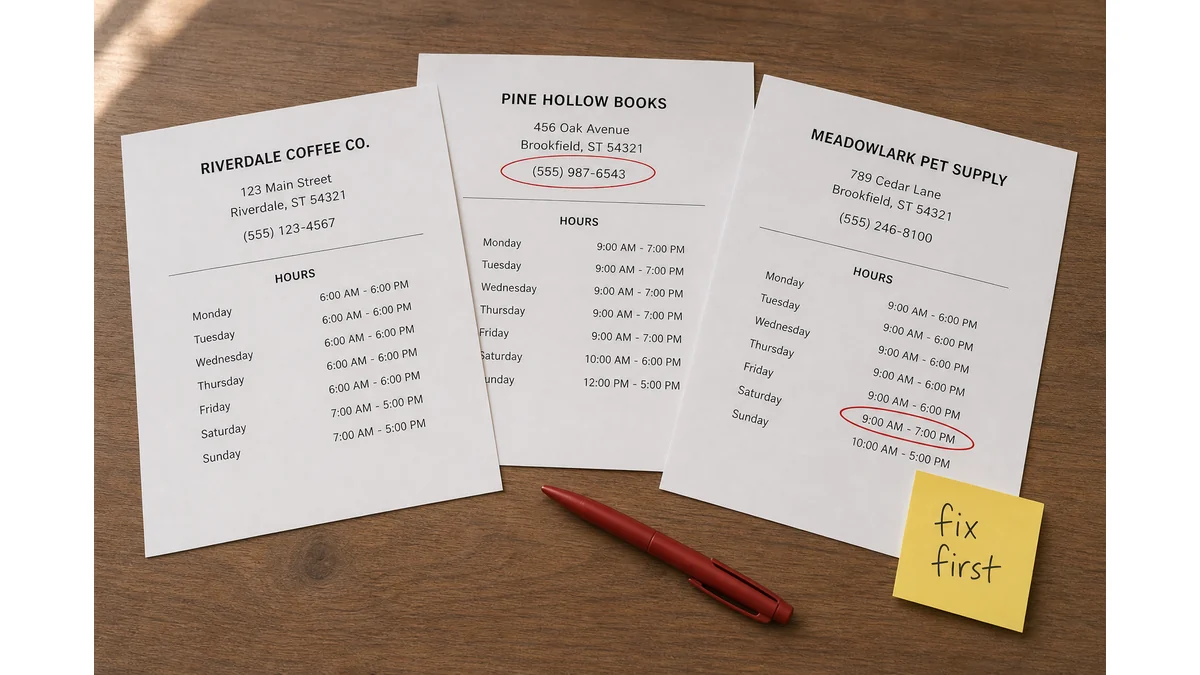
Name, address, phone number, hours, and services need to match across your website, Google Business Profile, Apple, Yelp, and the vertical directories your industry actually uses. When they do not match, the AI system either picks one version and hopes, or leaves you out to avoid guessing wrong. Neither outcome is good for you.
2. Public questions about you are going unanswered
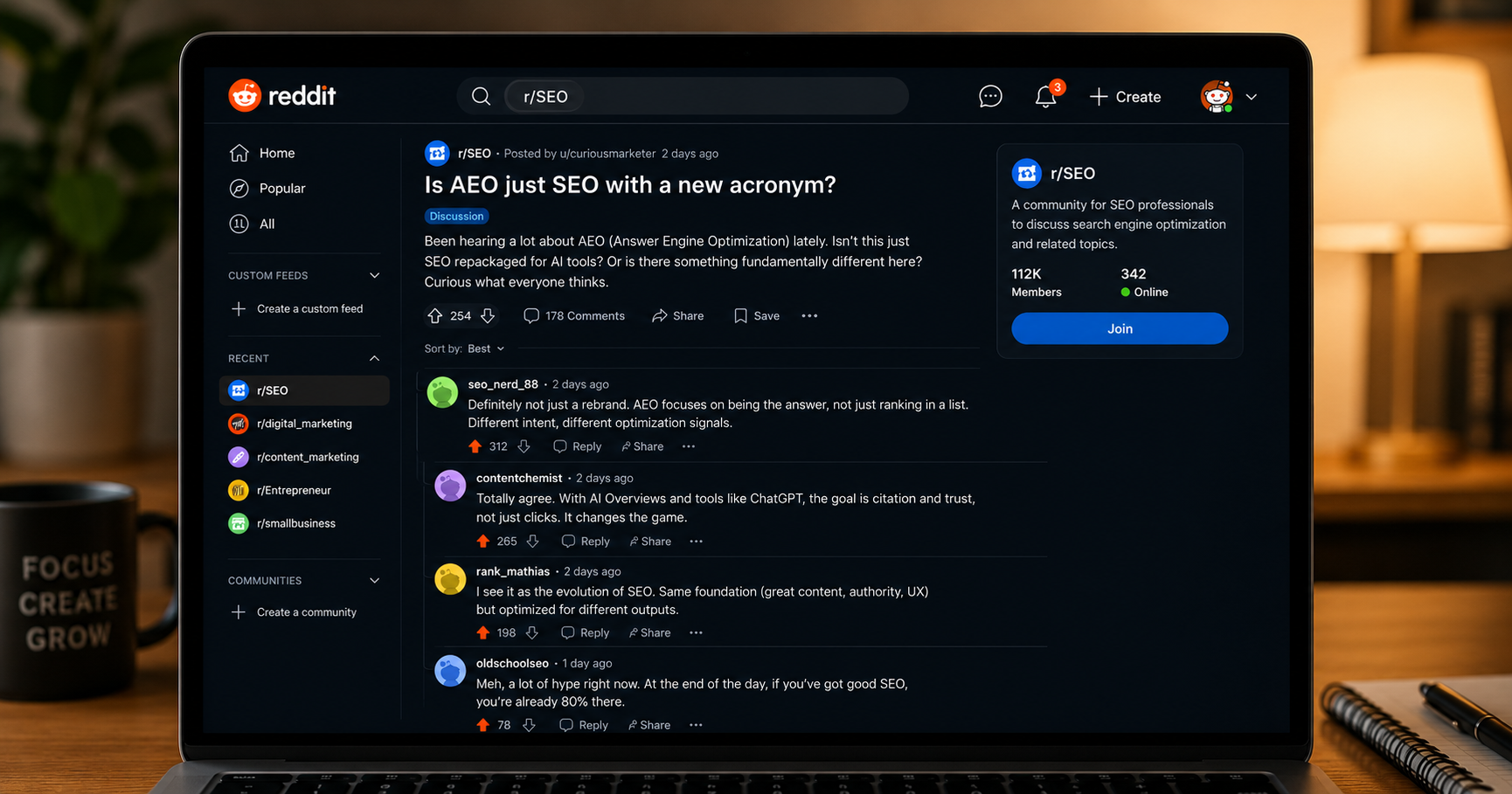
Google has started surfacing Reddit threads directly on business profiles, next to your address and hours. A thread asking "is this place worth it" now shows up to everyone who looks you up, answered or not. If nobody from the business responds, a stranger, a competitor, or the AI's own summary fills that silence — and not always in your favor.
3. Reviews are not doing the validation work they could
When your website claims fast service and friendly staff, and two hundred reviews across Google and Yelp back that up, AI systems can connect those dots and treat the claim as validated. Unanswered reviews, especially negative ones, send the opposite signal: nobody is watching. That reads as risk, and AI systems are conservative about recommending risk.
What To Fix First, In Order
Trying to fix everything at once is how these projects die. Work in this order.
- Audit your top 10 to 20 locations by revenue across Google, Apple, Yelp, and your top two industry-specific directories, and correct any name, address, or phone number mismatch.
- Search your own branch names and cities on Reddit and Google to see which threads already exist about you, then respond to the ones that are answerable and factually wrong.
- Close the review-response gap on your highest-traffic locations, prioritizing negative and unanswered reviews first.
- Build or clean up one useful page per priority location that states services, service area, and proof points in plain language an AI system can lift cleanly.
- Re-run the same audit quarterly, because directories drift and threads keep getting posted with or without you.

The Franchise Problem Nobody Wants To Own
If you run a franchise or multi-location brand, this is usually where things stall, because nobody wants to tell forty franchise owners they are now responsible for Reddit. The workable split is simpler than it sounds: corporate owns the source of truth — listings management, brand-safety guardrails, and the baseline location pages — while local operators own community context, like answering neighborhood questions and keeping location-specific FAQs current. Corporate keeps consistency. Local keeps it human. Skip either half and you get either a robotic brand voice with zero local trust, or fifty branches doing their own thing with data that never matches.

Where Reddit Fits and Where It Does Not
Reddit deserves real attention here, but it is market signal and public conversation, not a lever you pull by posting more. Nugentive treats forum and review chatter as evidence of what customers actually ask and doubt, then fixes the underlying data and content gaps those threads expose. Buying mentions or flooding threads with promotional posts tends to get flagged, downvoted, or ignored by the same systems you are trying to influence — a shortcut that creates noise without creating trust. The actual leverage is boring: accurate data everywhere, real answers to real public questions, and reviews that back up what your website already claims.
The Bottom Line for Owners
None of this requires believing in magic AI tricks. It requires knowing which of your locations have clean, consistent, defensible information across the places customers and AI systems actually look, and fixing the ones that do not before a competitor's cleaner data wins the recommendation instead. That prioritized fix list — which branch, which directory, which thread, in what order — is exactly what a proper AI visibility audit hands you, instead of another vague "improve your online presence" recommendation.
If you manage more than a handful of locations and have never checked whether AI assistants can find and correctly describe each one, that is the fastest way to find out what is actually costing you customers right now (/aeo-audit).