Isn't AEO just SEO with a new acronym?
Short answer: no, but the people asking that question are right to be suspicious.
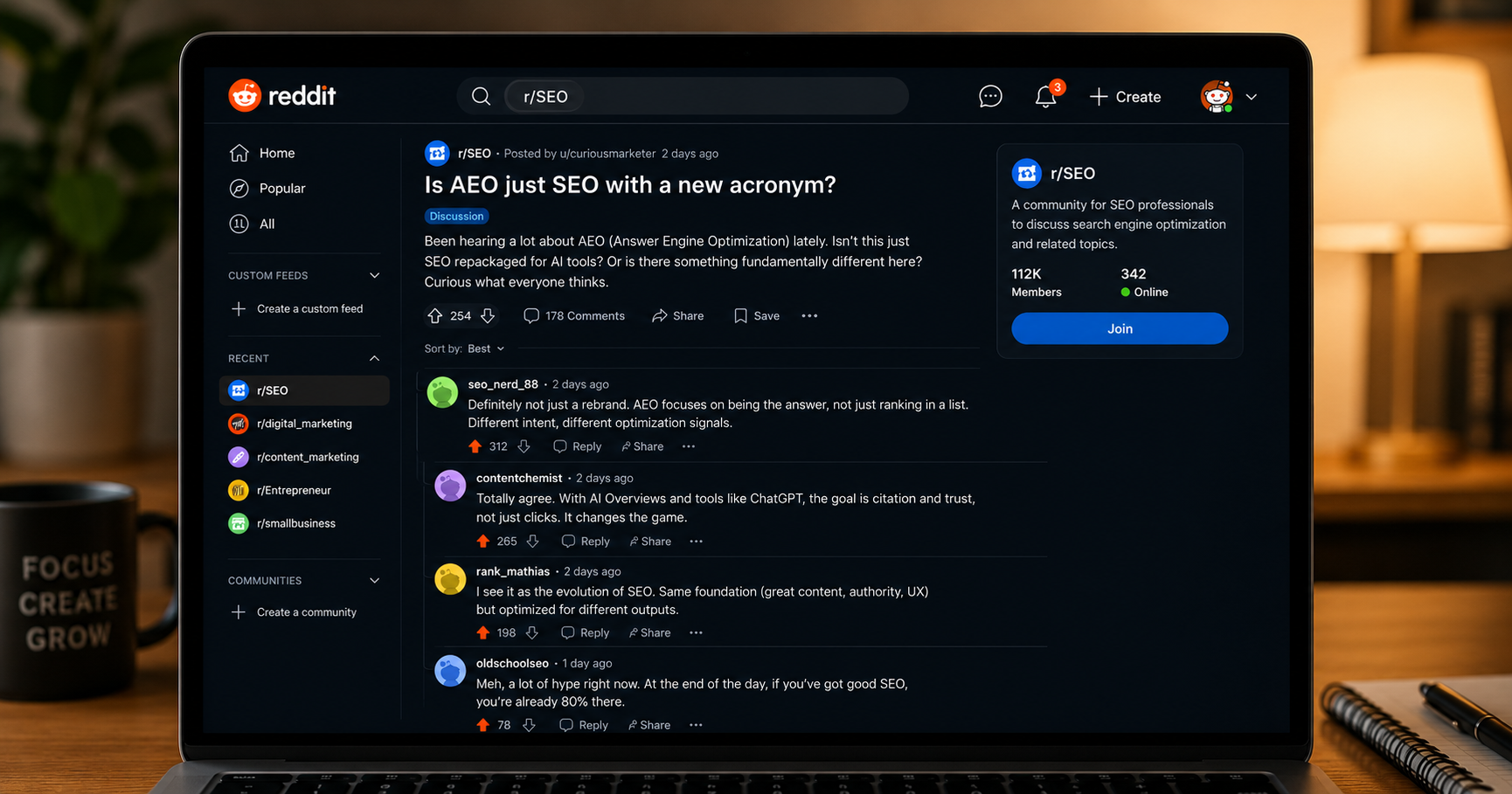
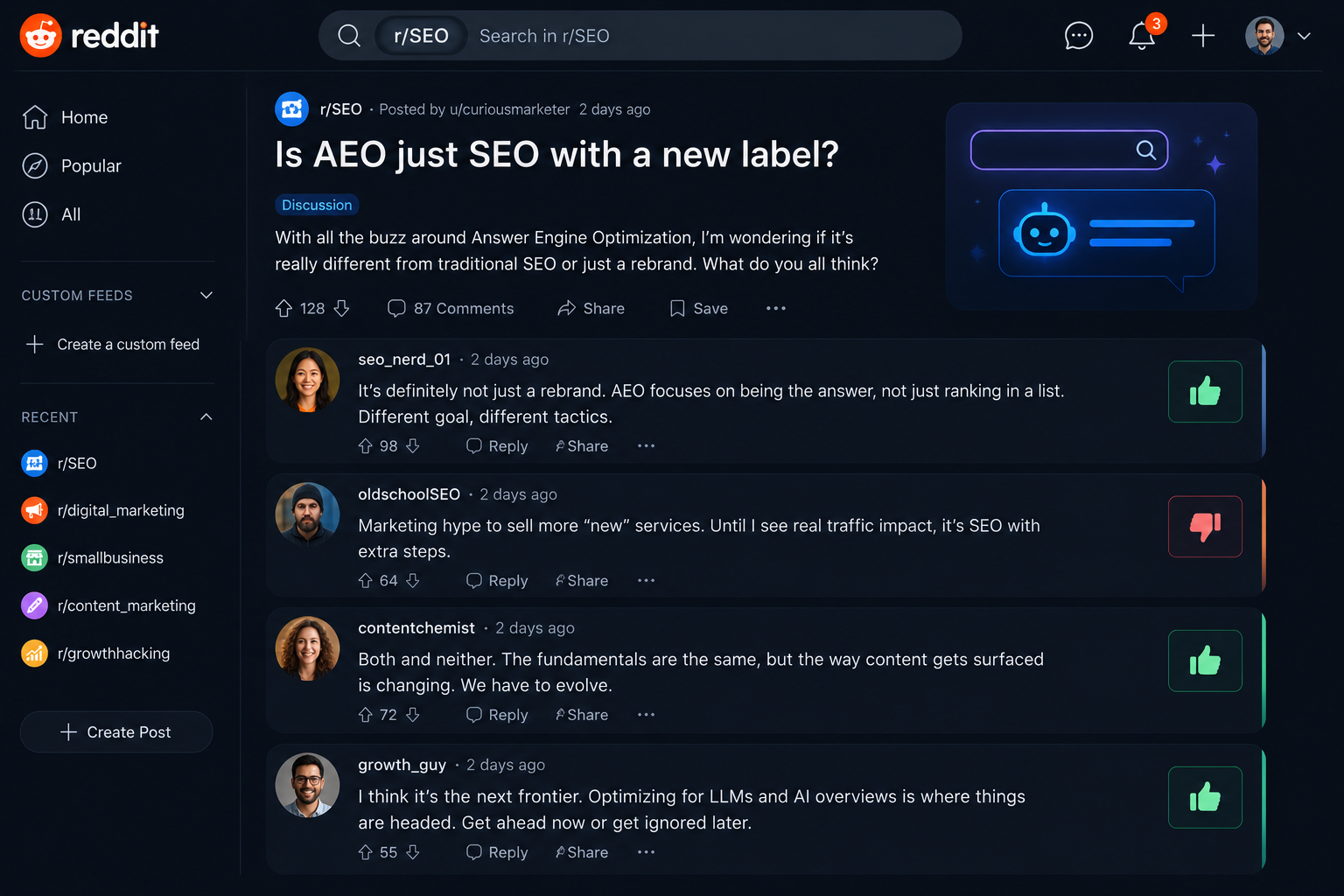
There's a pattern on Reddit and in small business forums right now. Someone reads a LinkedIn post about AEO, GEO, AIO, or whatever the consultant of the week is calling it. They post in r/SEO asking whether it's a real thing or just rebranded snake oil. The replies are split. Half say "it's all just SEO with extra steps." The other half say "no, you're missing the shift, AI search is genuinely different."
Both camps are partly right. The fundamentals haven't changed: credible content, clear structure, and a real reputation still win. But what AI assistants reward, and how they decide which sources to cite, is genuinely different from how Google ranks ten blue links. Pretending it's the same is how small businesses end up invisible in ChatGPT while still ranking on Google.
This post answers the questions actually being asked on Reddit about AEO and GEO, the skeptical ones, not the brochure ones.
What's the actual difference between AEO, GEO, and SEO?
The three terms describe related but distinct goals.
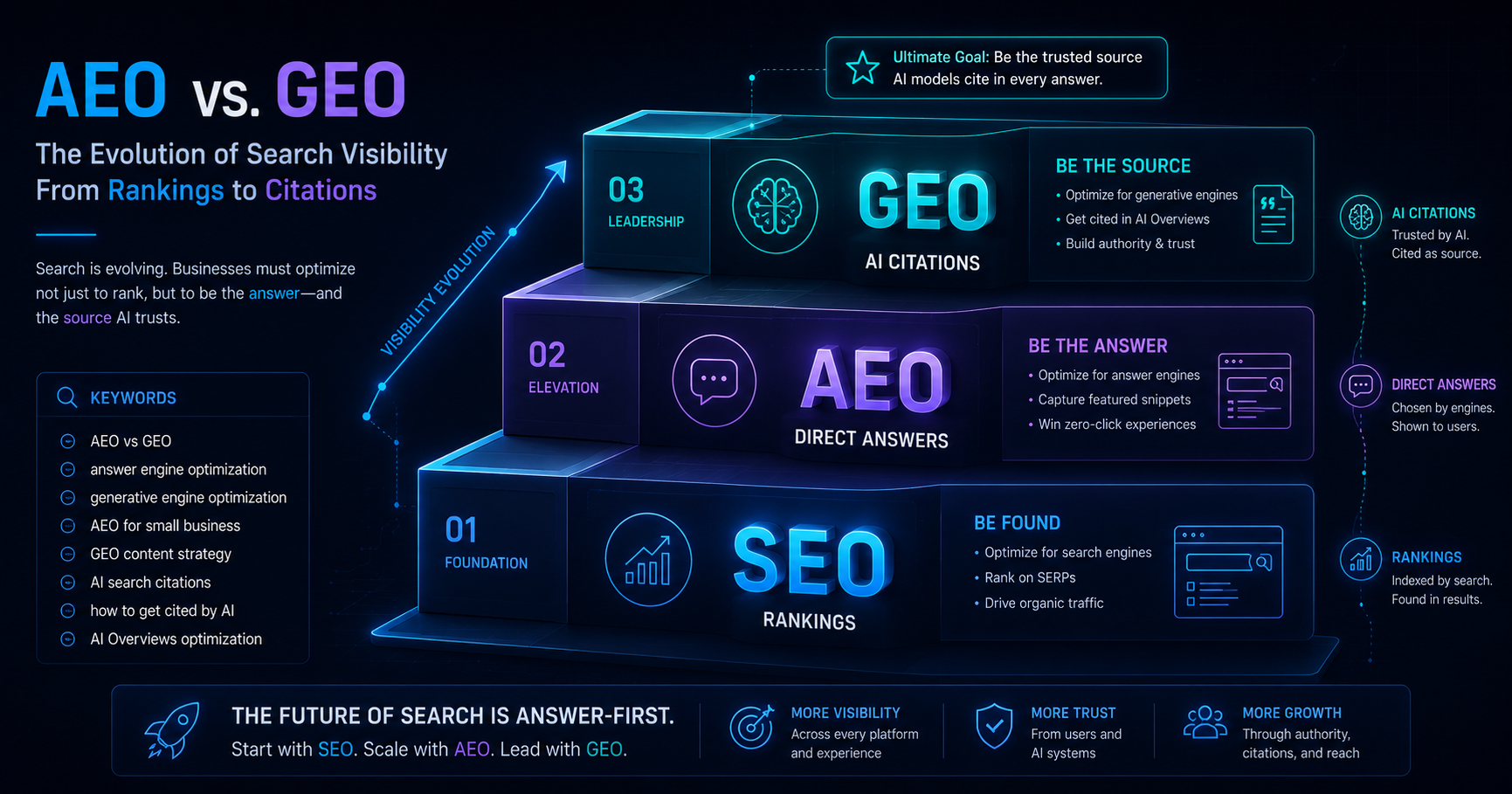
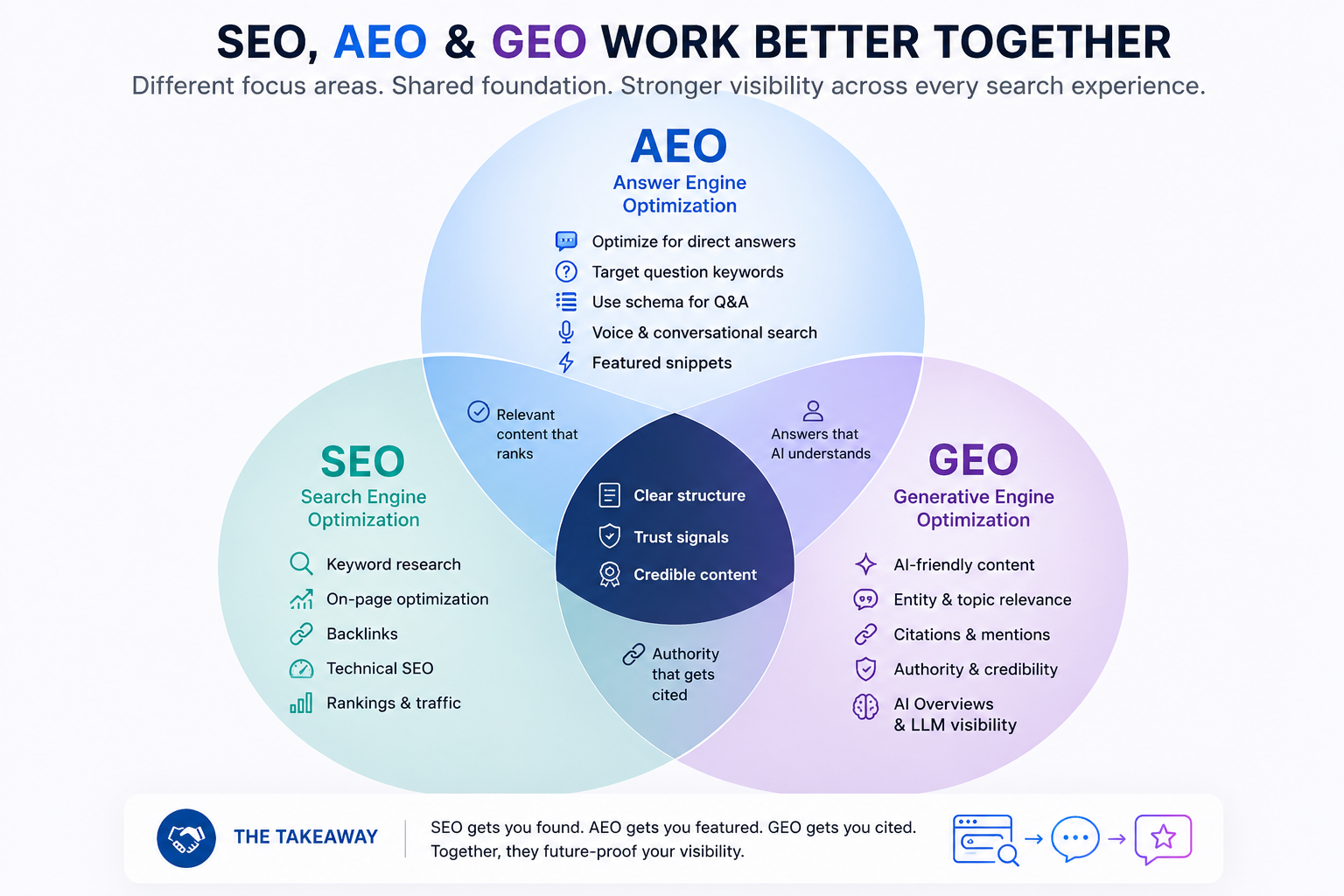
SEO (Search Engine Optimization) targets traditional search results, the ten blue links on Google or Bing. The goal is to rank, get clicked, and bring traffic to your site.
AEO (Answer Engine Optimization) targets the answer itself, featured snippets, voice assistant responses, AI Overviews, and the paragraph an AI assistant pulls into its answer. The goal is to be the cited source, whether or not the user clicks.
GEO (Generative Engine Optimization) targets how generative AI tools like ChatGPT, Perplexity, Gemini, and Claude synthesize their answers. The goal is to be one of the sources the model recognises, trusts, and weaves into its generated response.
In practice, AEO and GEO overlap heavily. Most of the optimization work serves both. The reason both terms exist is that AEO grew out of voice search and featured snippets a few years ago, while GEO is the newer label coined specifically for the generative AI era. Different consultants picked different acronyms, and now both are in circulation.
For most small businesses, the practical answer is: don't pick a side. Optimize for the underlying behaviour (being recognised and cited by AI systems) and ignore the acronym fight.
Is GEO just AEO with a different name?
Mostly, yes. The two terms describe overlapping practices aimed at the same outcome: showing up in AI-generated answers. GEO tends to emphasise the generative side (how content gets synthesised into a new response), while AEO tends to emphasise the answer side (how content gets extracted as the direct answer). The distinction matters more in conference talks than in actual implementation.
Are AEO and GEO real, or just consultant hype?
Both. The hype is real and the shift is real, and they're not the same thing.
The hype is the part where every agency suddenly added "AI search optimization" to their service menu, charges a premium for it, and runs the same content audit they were running two years ago. That's fair to call out, and Reddit usually does.
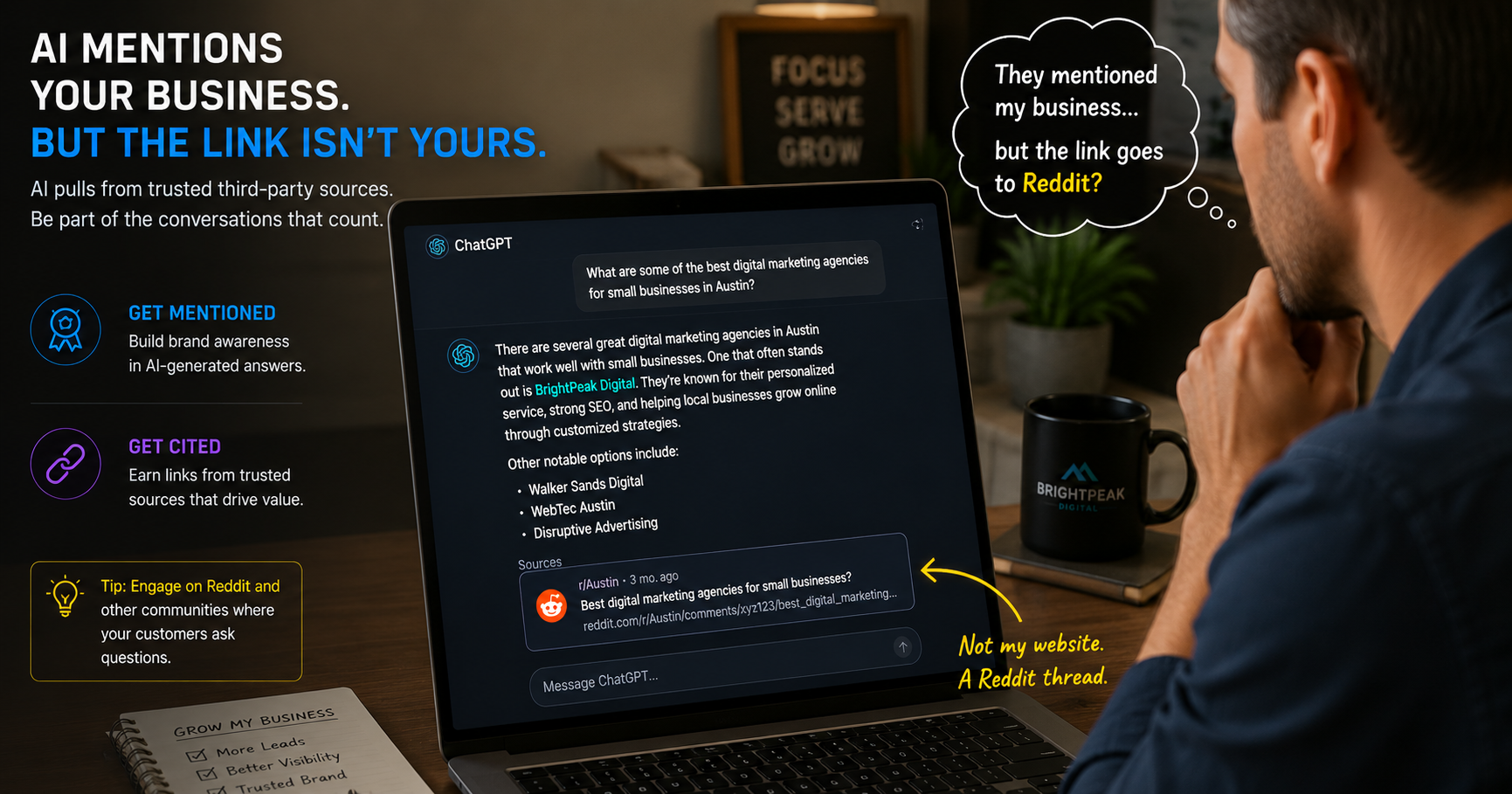
The shift is the part where AI assistants are now answering 21% or more of search queries directly, where ChatGPT has roughly 400 million weekly users, and where AI tools regularly cite Reddit threads, G2 pages, or competitor sites instead of the brand's own website. None of that is an SEO firm's marketing copy. It's measurable behaviour, and it changes which businesses get found.
So the right question isn't "is this real or fake." It's "which parts are real, and which parts is my consultant overcharging me for." A useful test: if someone is selling you AEO that's just an FAQ schema upgrade plus a content rewrite for $5,000, you're paying agency rates for SEO basics. If someone is showing you which AI platforms cite your competitors instead of you and what specifically would close the gap, that's actual AEO work.
Do I need AEO if my SEO is already working?
Yes, because they measure different things.
Strong SEO means your site ranks in Google. Strong AEO means your site gets cited or your business gets mentioned in AI answers. The overlap between the two is real but partial. Research from Princeton and others has shown roughly 40% of AI citations come from Google's top 10 results, which means SEO is a head start, but it also means roughly 60% of AI citations come from somewhere other than the top of Google. A site can rank well and still be invisible in ChatGPT, and a site with no Google presence can still get pulled into AI answers if it has the right structure and credibility signals.
The practical version of this answer: keep doing your SEO. Don't tear it down to chase AI. Add AEO on top, focusing on the parts where AI assistants behave differently from Google, namely, structured extraction, FAQ content, third-party corroboration, and entity recognition.
Does AEO work for small businesses, or only for big brands with agencies?
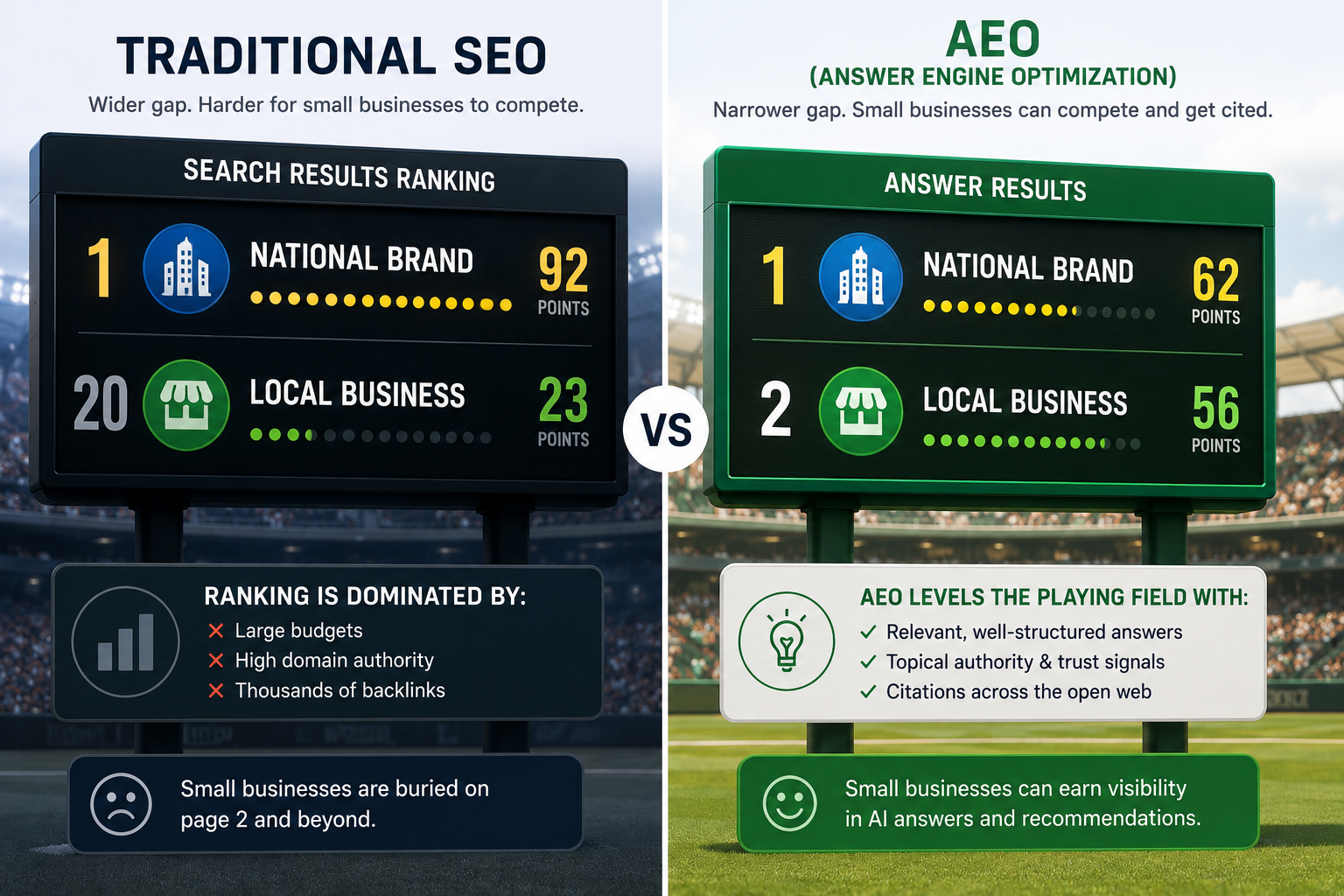
It actually favours small businesses more than traditional SEO does.
Traditional SEO rewards domain authority, backlink volume, and budget. A national brand with a hundred-person content team will outrank a local plumber on most generic queries no matter what the plumber does. AEO rewards specificity, structure, and authentic local signals. An AI assistant answering "best plumber in Calgary" doesn't want a corporate listicle from a national directory. It wants a real local business with consistent details, credible reviews, and a site that clearly answers the questions a buyer would ask.
That makes AEO one of the more level playing fields a small business has had in twenty years. The work is unglamorous: schema markup, FAQ pages, Google Business Profile maintenance, review consistency, and a real Reddit or community presence, but it's all within reach of a one-person operation. None of it requires an agency retainer.
Can I do AEO myself without hiring an agency?
Yes, for most of the basics. The non-negotiables (a complete and active Google Business Profile, consistent business details across every platform, a real FAQ section with proper schema, single-purpose pages that lead with the answer, and steady reviews) are all owner-doable. Where agencies earn their keep is on the diagnostic side: figuring out exactly which queries your competitors are getting cited for that you aren't, and why. That's the part most owners can't see from inside their own business.
How do I actually start with AEO if I'm a small business?
The shortest useful list, in priority order:
Audit your Google Business Profile. Is it complete, current, and active? Are you posting updates and answering Q&A? Is the category correct?
Check your business details everywhere. Name, address, phone, hours, and service area should match exactly across your site, GBP, Yelp, Facebook, and any directories. Mismatches split your entity in AI's view.
Add LocalBusiness and FAQPage schema to your site. This is the highest-leverage technical fix most small business sites are missing.
Restructure your top three to five pages so each section opens with a direct answer to a specific question, with a question-shaped heading above it.
Build a real FAQ section answering the actual questions customers ask before they hire you. Three to five questions, two to four sentence answers each.
Run the same searches a customer would, in ChatGPT, Perplexity, and Google's AI Overviews. Note where you're mentioned, where you're cited, and which third-party sources are getting cited instead of you.
That list will move the needle for most small businesses without any paid tooling. Where it stops being enough is when you've covered the basics and need to know which competitor is taking your citation share for which queries, that's where a structured audit or external review starts to pay off.
How do I know if AEO is actually working?
Track three things on a monthly cadence: mentions, citations, and which third parties get cited instead of you.
Pick the ten queries a real customer would ask before hiring you: your trade in your city, common pricing questions, common comparison questions, and your brand name. Run them in ChatGPT, Perplexity, and Google's AI Overviews on the first of every month. For each result, note whether you're mentioned by name, whether you're cited with a direct link to your site, and which other source got the citation if it wasn't you.
Three months of that log tells you almost everything you need to know. If mentions are growing but citations aren't, your third-party footprint is improving but your own pages still aren't extractable enough. If neither is moving, you don't have enough recognition for AI to surface you yet, and the work is on both the on-site structure and the off-site presence.
What you don't need is a $200-a-month visibility tool to start. Those tools matter once you have established traction and want to track share-of-voice against competitors. Before that point, a spreadsheet and ten searches a month is enough.
The acronym fight will sort itself out. Whether you call it AEO, GEO, AIO, or just "showing up in AI answers," the underlying work is the same and the businesses that start now will be the ones AI recommends a year from today.
A free Nugentive AEO audit shows you exactly where your site stands, which pages are extractable, where your schema is missing, how your business looks to AI assistants, and which competitors are getting cited for the queries you should own. Run yours at.