The Video Nobody Watched Can Still Win The Customer
YouTube for AI visibility is not mainly a play for views. It is a way to put useful demonstrations, explanations, and third-party voices where buyers and search systems can discover them. A niche video with a modest audience can still influence an AI answer, earn a citation, send qualified visitors, or settle the question that was blocking a sale. The useful metric is not whether the counter looks impressive. It is whether the right customer moves closer to choosing you.
That distinction matters because YouTube videos are appearing as cited sources in Google AI Overviews. Search Engine Journal recently argued that marketing teams have underinvested in the platform while measuring creator work too narrowly (https://www.searchenginejournal.com/the-ai-overviews-youtube-gap-the-platform-your-team-skipped-for-20-years/582702/). It is an important signal, not proof that uploading a video automatically produces citations. The algorithm does not hand out recommendations as a participation trophy. Still, businesses that can answer buyer questions visually now have another source format working beyond the familiar list of website pages.
Why This Matters To Revenue, Not Just Reach
A customer comparing contractors, software, equipment, or professional services often wants to see the thing work. Text can state that an installation is tidy, a product is durable, or a process is straightforward. Video can show the installation, stress-test the product, or walk through the process while the evidence is on screen. That reduces uncertainty, and reducing uncertainty is what moves a buyer from "maybe" to "call them."
YouTube's 2025 U.S. Impact Report says 76% of surveyed small and medium-sized businesses with a YouTube channel agreed the platform helped them grow their customer base by reaching new audiences (https://blog.youtube/news-and-events/2025-us-youtube-impact-report/). That is self-reported survey evidence published by YouTube, so it should not be mistaken for a universal conversion guarantee. It does support a practical point: businesses are getting customer value from the channel, even when their marketing dashboard cannot draw a tidy straight line from a view to a sale.

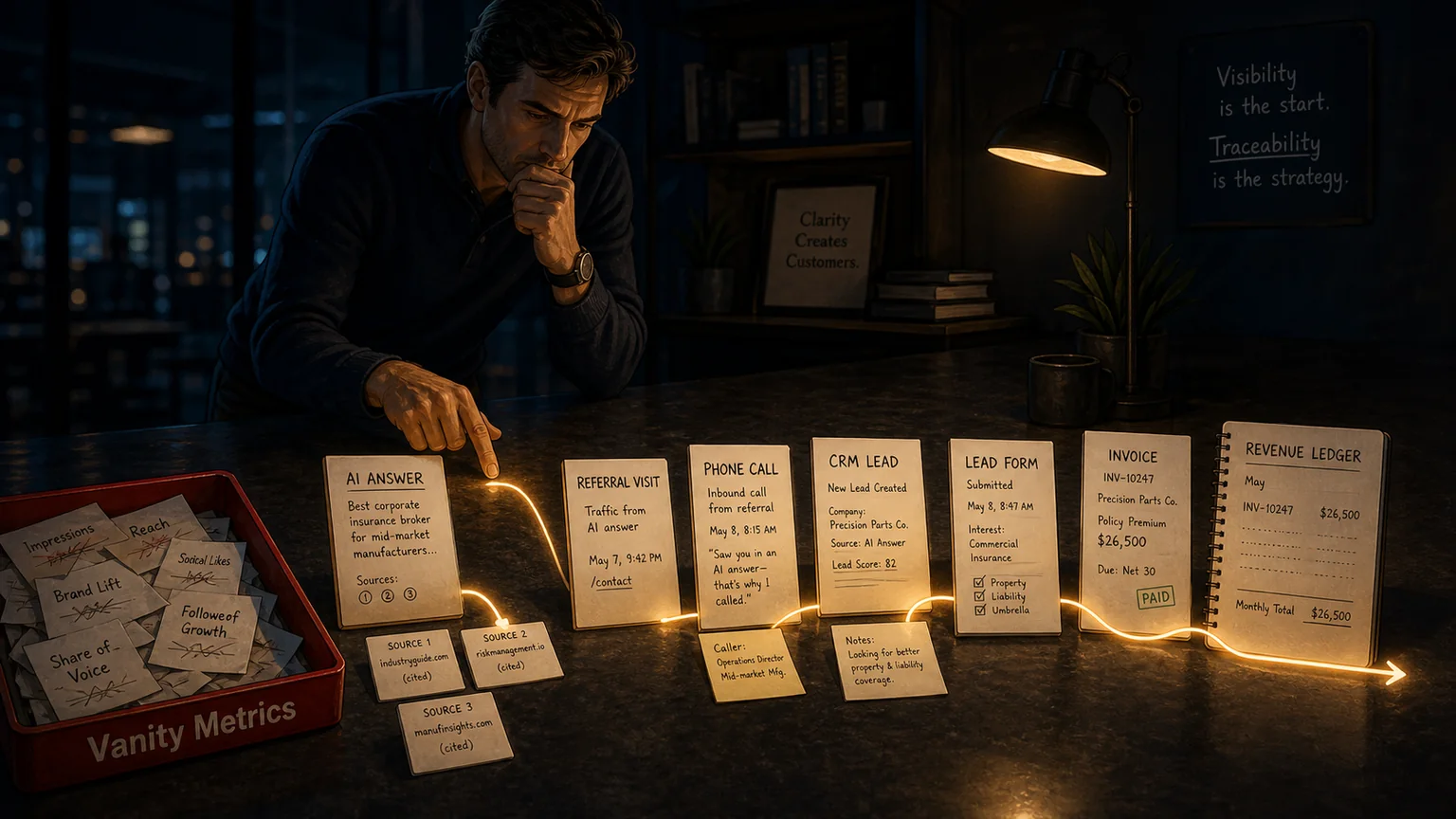
The downstream effect is easy to miss. Someone sees a creator explain your category, later asks Google or ChatGPT for options, recognizes your name, searches it directly, and calls. Analytics may label that visit "direct" and wander off feeling accomplished. The video still did work. Your reporting simply gave the credit to the last measurable step.
What Makes A Video Useful For AI Visibility
The best candidate is not your company sizzle reel. Buyers rarely ask an AI assistant to find a two-minute montage of smiling employees walking purposefully through a hallway. They ask specific questions: Which option fits an older home? What does the repair involve? How does this tool compare under real conditions? What should this service cost? What goes wrong after six months?
Build videos around those questions. Use one clear topic, answer it early, demonstrate what can be demonstrated, and support claims with visible evidence or named sources. Give the video an accurate title and description, include the relevant page on your website, and provide a transcript or written companion that makes the explanation accessible in both formats.
Google's video guidance recommends creating a dedicated watch page for each important video, making the video prominent, providing a stable thumbnail, and adding valid VideoObject structured data where appropriate (https://developers.google.com/search/docs/appearance/video). Those steps help Google discover and understand the video. They do not guarantee an AI Overview citation. Schema is a label, not a character reference.
A useful video package usually includes:
- A buyer question with real commercial relevance
- A direct spoken answer near the beginning
- A demonstration, comparison, walkthrough, or expert explanation
- Accurate title, description, thumbnail, and transcript
- A dedicated website page that adds context and proof
- A clear next step for a viewer who is ready to call, book, or request a quote
You Do Not Need To Become A Full-Time Creator
Starting a channel from zero can make sense if your team has repeatable expertise, a patient publishing plan, and somebody willing to own production. It is not the only route. A specialist creator, customer, installer, practitioner, or industry educator may already have the audience and category credibility you lack.
The sensible partnership is not "say we are amazing and hold the product near your face." It gives the creator enough access to test, question, compare, and explain honestly. That means accepting that a credible video may include limitations, fit guidance, or situations where another option is better. Mildly terrifying to a brand-approval committee, perhaps. Much more useful to a buyer.
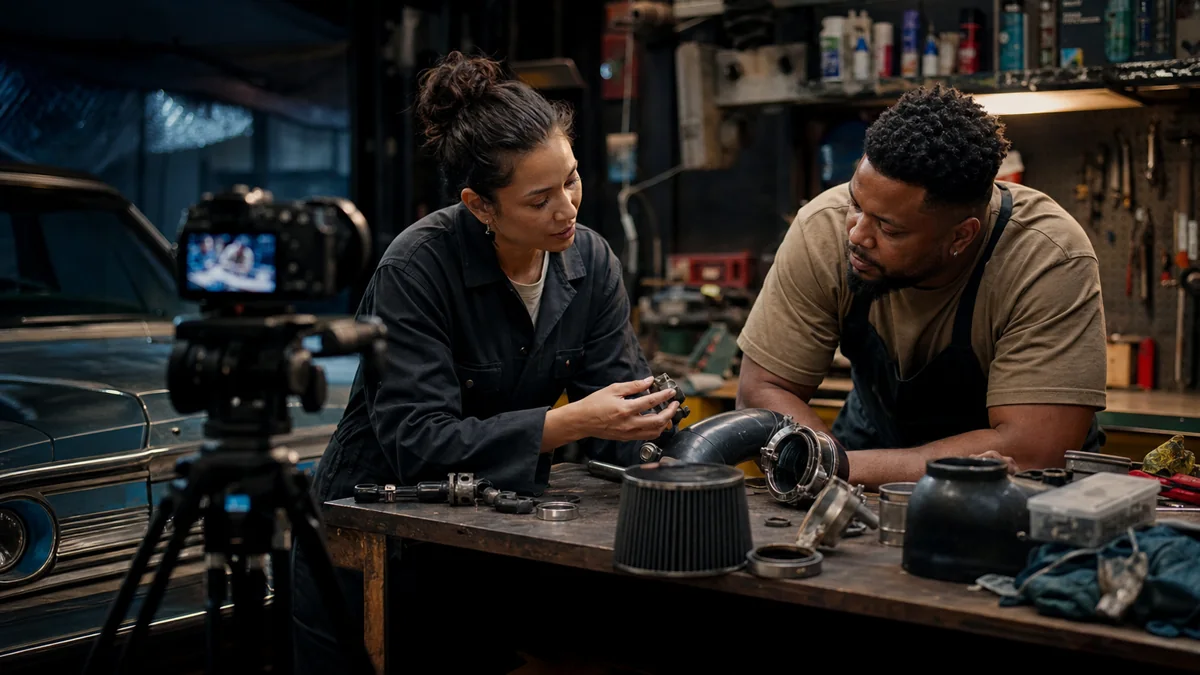
Choose partners based on category relevance, audience fit, explanation quality, and trust, not raw follower count. A smaller channel watched by the exact people who buy your service can produce more business value than a broad channel whose audience enjoys the video and will never need you. Reach is only impressive when it reaches somebody useful.
Stop Reporting The View Counter As The Result
Views are an activity metric. They can help compare distribution, but they do not tell you whether the content influenced discovery, trust, or revenue. A better measurement plan starts before filming and tracks several downstream signals together.

Track:
- Referral visits and assisted conversions from YouTube
- Branded search changes after a video or creator partnership launches
- Leads that mention a video, creator, review, or demonstration
- AI Overview and answer-engine citations for the exact buyer questions covered
- Sales objections resolved by sending the video during follow-up
- Revenue or qualified pipeline connected to viewers where attribution is available
Do not overread a single prompt test. AI answers vary by wording, location, account context, and time. Establish a repeatable set of buyer-like questions, record the sources each system cites, and watch for patterns. One appearance is interesting. Repeated visibility across relevant questions is evidence worth acting on.
A Practical First Experiment
Pick one expensive customer question your current website answers poorly. It should be specific enough to demonstrate and close enough to a buying decision that resolving it matters. Create one genuinely useful video with either your own expert or a credible niche partner, then publish a companion page with the transcript, supporting evidence, clear service context, and a next step.
Give the experiment enough time to be discovered, then compare the signals above with your baseline. Did the video earn qualified visits? Did sales use it? Did branded demand change? Did it appear as a cited source for the target question? Did prospects arrive better informed? If the answer is no, diagnose the topic, distribution, evidence, and technical setup before declaring video useless or ordering 40 more episodes.
The point is not to become famous on YouTube. It is to become easier for the right customer to discover, understand, trust, and choose. An AI Visibility Audit can identify the buyer questions where you are absent, the sources AI systems currently rely on, and the content formats worth testing first, so your next video has a business job instead of merely a publishing date.