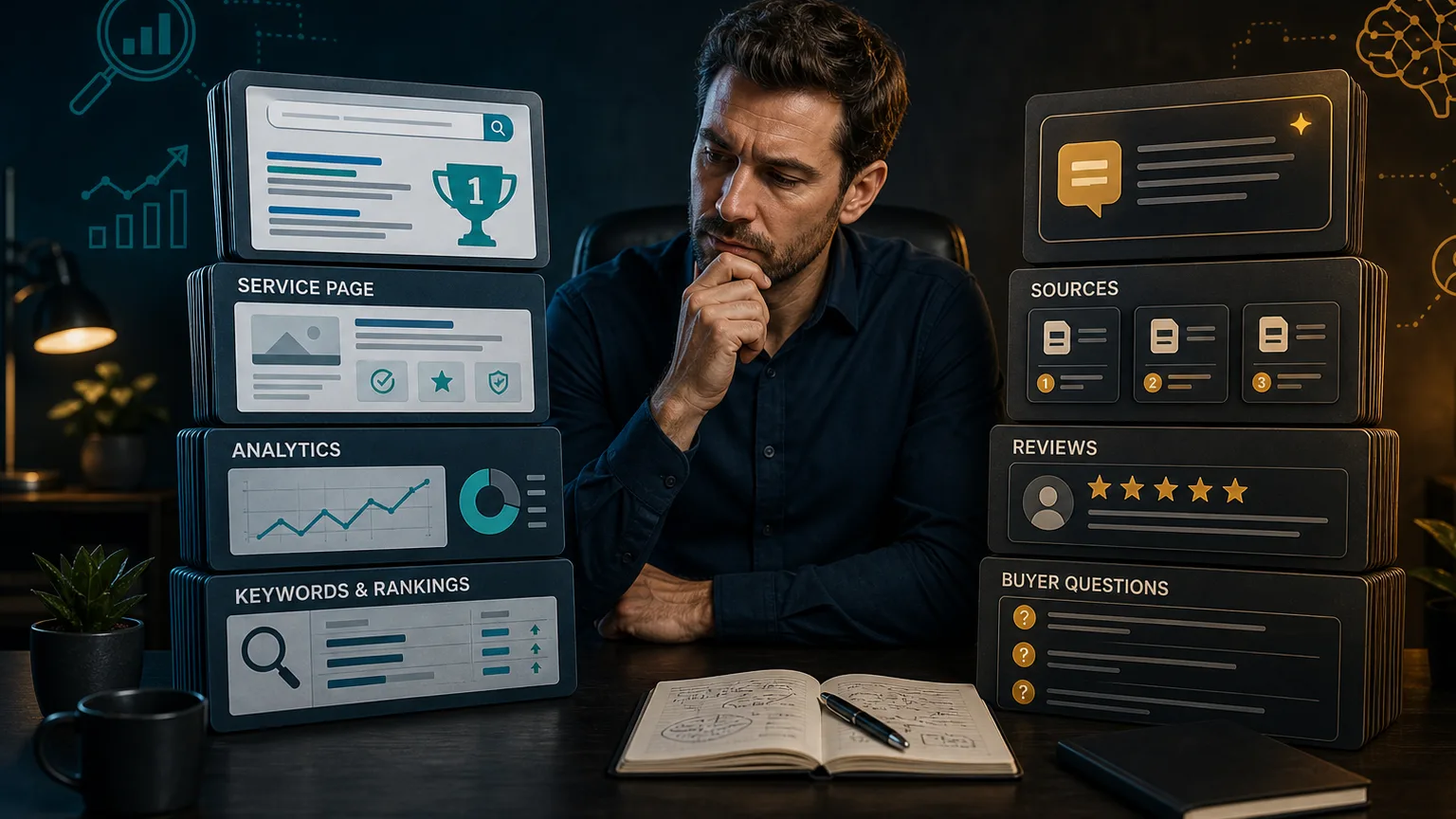
The Customer Still Wants the Same Thing
SEO vs AEO sounds like a fight between two acronyms that should both be asked to leave the meeting. The business question is calmer: can a customer find enough evidence to trust you and take the next step?
SEO helps your business show up in search results. AEO helps your business become answer-ready when AI systems summarize options, cite sources, or recommend next steps. Same buyer.
If your website is thin, confusing, inconsistent, or allergic to proof, changing the label from SEO to AEO will not save it. That is acronym laundering.
The practical answer: fix the shared fundamentals first, then add answer-specific work where it changes customer decisions.
What SEO Is Supposed to Do
Search engine optimization makes your website discoverable, understandable, useful, and competitive in traditional search. Google’s SEO Starter Guide still points owners toward basics that have not expired: helpful pages, descriptive titles, clear structure, crawlable content, useful links, and a site that serves people instead of just algorithms (https://developers.google.com/search/docs/fundamentals/seo-starter-guide).
For an owner, SEO should help qualified people find the right page and believe it enough to call or ask for a quote. Rankings create attention. Attention matters only if the page turns it into action.
Good SEO work includes technical access, page structure, intent research, internal links, local listings, reviews, service pages, and buyer-question content. None of this is glamorous. Neither is plumbing. Try running a business without it.
What AEO Is Supposed to Do
Answer engine optimization is the work of making your business easier for answer systems to retrieve, understand, cite, compare, and recommend. It builds on SEO, but the emphasis shifts from “can this page rank?” to “can this evidence support a useful answer?”
Google’s guidance for AI features does not tell site owners to chase a secret AI-only ranking tag. It points back to Search eligibility, accessible content, standard preview controls, and useful content Google systems can understand (https://developers.google.com/search/docs/appearance/ai-features). Very disappointing for anyone selling magic schema dust, but good news for adults.
AEO asks sharper questions about answer quality. Does your site say what you do plainly? Are service areas clear? Are process, proof, reviews, FAQs, and comparisons specific enough to help a buyer choose? Do third-party sources confirm your claims? Can AI systems connect your business name, category, location, and credibility without guessing?
Where SEO and AEO Overlap
Most owners should not treat SEO and AEO as two separate departments, two vendors, or two monthly reports fighting for budget like raccoons in a dumpster.
They overlap in the work that makes a business understandable.
- Crawlable pages help search engines and AI systems access the facts.
- Clear service pages explain what you sell, where, and for whom.
- Helpful content answers questions buyers ask before they contact you.
- Consistent business information reduces confusion across platforms.
- Reviews, case details, credentials, and third-party mentions strengthen trust.
- Strong conversion paths turn visibility into calls, forms, bookings, and sales.
Google’s helpful content guidance says useful content should be created for people and leave readers feeling they learned enough to meet their goal (https://developers.google.com/search/docs/fundamentals/creating-helpful-content). That is also a useful AEO standard. If a human cannot understand the page, expecting an AI system to turn it into a recommendation is bold. Not wise. Bold.

Where AEO Adds New Work
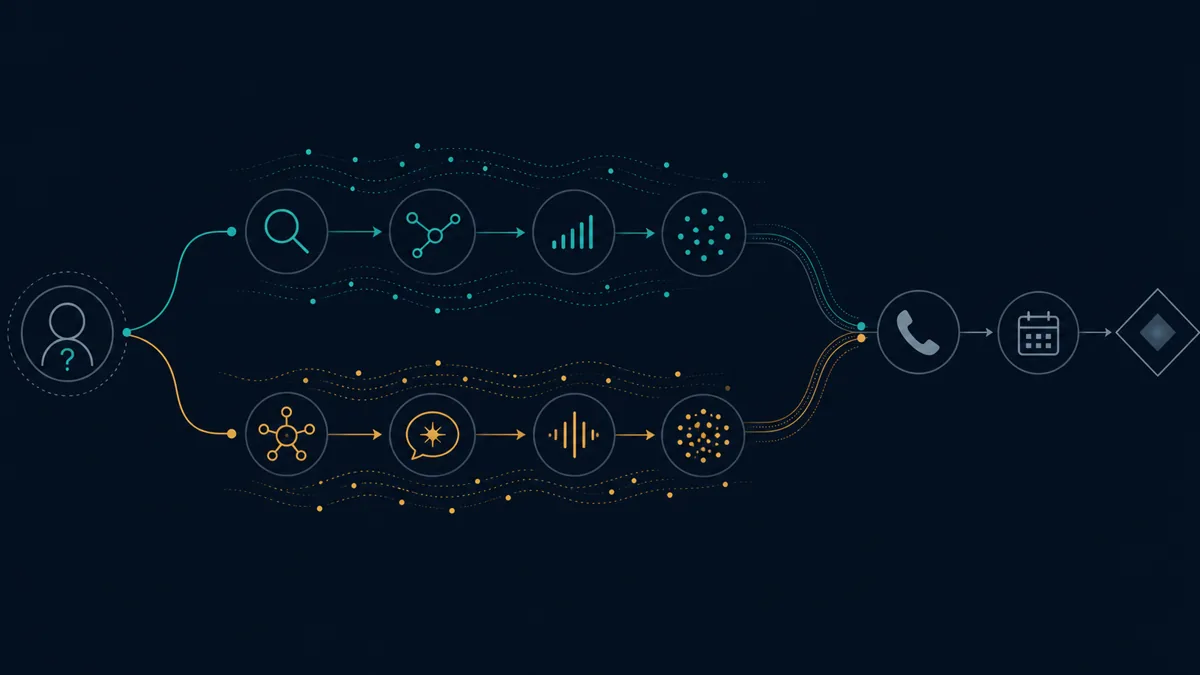
AEO adds work because AI answers compress the decision journey. A customer may ask for the best provider, a short comparison, a price expectation, red flags, or a recommendation near them before clicking any site. That changes what your public evidence needs to support.
Answer-ready content
Traditional SEO might target a service keyword with a decent page. AEO pushes the page to answer follow-up questions too: who is this for, what problem does it solve, how does the process work, what proof supports the claim, and when should a customer choose someone else? Honest tradeoffs can make a page more trustworthy. “We are perfect for everyone” is not positioning. It is a cry for help in brochure form.
Entity clarity and source depth
AI systems need to connect your business to the right category, services, locations, people, and proof. If your homepage calls you an “innovative solutions partner” while your Google Business Profile says “HVAC contractor,” the machine is not the only one confused. Use plain language, clean up profile contradictions, and strengthen the reviews, directories, local listings, videos, and third-party references buyers already check.
Prompt-level testing
SEO reporting often starts with rankings, impressions, clicks, and conversions. AEO needs prompt testing too. Ask buyer questions. Record whether your business appears, which competitors appear, what sources are cited, what facts are wrong, and what page or proof gap caused the weakness.
What to Fix First
If budget is limited, start where both benefit.
- Make important pages accessible to normal search crawlers.
- Clarify each core service page so a buyer can understand the offer in thirty seconds.
- Add service-area, pricing-context, process, proof, review, and FAQ sections where they help the decision.
- Clean up business name, address, phone, categories, hours, and service descriptions across major profiles.
- Link related pages so customers and crawlers can follow the logic.
- Improve calls to action so a qualified visitor knows exactly what to do next.
- Test real buyer questions in search and AI systems once the basics are not embarrassing.
This order matters. If your service page barely explains the service, AI answer testing will mostly confirm that. Insightful? Yes. Worth a subscription? Probably not.
When SEO or AEO Should Lead
SEO should lead when your site does not rank for core services, location pages are weak, technical access is messy, or pages fail buyer intent. Traditional search still drives real customer discovery. Google is not a museum exhibit just because AI features are louder this year.
Fresh reporting on Gemini 3.7 Flash rolling into Google AI Mode signals that AI features inside search keep getting faster and more capable (https://searchengineland.com/gemini-3-7-flash-rolling-out-in-google-search-485058). That does not mean owners should abandon SEO. It means search is adding answer layers on top of the same public evidence problem.
AEO should lead when customers ask AI systems comparison questions, your brand appears inaccurately, competitors get recommended for money queries, or leadership needs to know why visibility is not turning into leads. AEO changes the inspection lens from “Where do we rank?” to “What would an answer engine need to say about us?”
A Simple Decision Framework
Use this before buying a new tool, changing vendors, or starting an acronym war in Slack.
- If buyers cannot find your core pages in search, prioritize SEO access and service-page strength.
- If buyers can find you but do not convert, prioritize page clarity, proof, and conversion paths.
- If AI answers misunderstand your business, prioritize entity clarity and source consistency.
- If competitors appear in AI answers and you do not, compare their pages, reviews, citations, and third-party proof.
- If your team cannot explain what changed after last month’s work, fix measurement before expanding scope.
The right sequence is usually not SEO or AEO. It is diagnosis, shared fundamentals, answer readiness, then measurement. Less exciting than a rebrand. Much more useful.

Common Mistakes
The first mistake is declaring SEO dead. Search is changing, not packing its suitcase and leaving town.
The second mistake is buying AEO reporting before fixing obvious page weaknesses. Measurement without implementation is expensive theater.
The third mistake is treating schema as the plan. Schema can help machines interpret real page information. It does not create trust from thin air. If schema alone made AI systems recommend you, every plugin would be printing money by now.
The fourth mistake is chasing platform updates instead of customer questions. Gemini versions and AI Mode rollouts matter, but the owner’s job is still to answer the buyer better than competitors do.
The Bottom Line
SEO vs AEO is the wrong fight if your goal is more customers. SEO helps your business get discovered in search. AEO helps your business become usable evidence inside answer systems. Start with clear pages, accessible content, consistent facts, proof, reviews, and conversion paths.
Fix the business evidence first. Then measure how search and AI systems use it.
If your site leaks customers because the offer is vague, the proof is thin, or the next step is hidden, the acronym on the invoice will not matter. Customers care whether they can understand why you are the safe choice and how to contact you.