
The Expensive Part Is Not the Click
Organic traffic vs paid traffic cost is usually framed as a traffic argument. That is already where the math starts wobbling. A paid ad click buys one visit. Not a lead. Not an appointment. Not a customer. One person, one tap, one tiny invoice with excellent posture.
Nugentive’s validated DataForSEO capture from July 30, 2026 estimated the U.S. CPC for ai visibility audit at $62.08, ai seo services at $78.77, and generative engine optimization services at $39.88. Those are paid-ad click estimates, not guaranteed Google Ads prices and not proof that organic rankings will be easy. Still, they tell an owner something useful: in some markets, asking strangers to visit your site gets expensive before the site proves it can convert them.
At $62.08 per click, 10 clicks imply $620.80 in ad spend. Fifty clicks imply $3,104. One hundred clicks imply $6,208. That is before the landing page convinces anyone to book, buy, call, or trust you with their money. If the page is vague, slow, or thin, the click cost is not the only leak. It is just the easiest one to see.

Paid Traffic Rents Attention One Visit at a Time
Google Ads can be useful. Let’s not do the dramatic “ads are dead” routine. Google’s own help documentation explains that cost-per-click bidding means you pay for each click on your ad (https://support.google.com/google-ads/answer/6297). Google also describes Quality Score as an estimate of ad, keyword, and landing page quality that can help diagnose performance (https://support.google.com/google-ads/answer/2472719). Translation for owners: the ad auction cares about the click, but the business cares about what happens after the click.
Paid traffic works well when you need fast demand capture, want to test an offer, have a reliable conversion path, or need visibility while organic work is still maturing. It is also measurable in a way owners like: spend this, get those clicks, count the calls. Clean. Comforting. Occasionally expensive enough to make your spreadsheet sit down.
The downside is structural. When the campaign stops, the clicks stop. If the cost per qualified lead rises, you either improve the economics or keep feeding the machine. Paid acquisition is not bad. It is a rental model. Rentals can make sense. They just should not be mistaken for ownership.
Organic Search Is an Asset, Not Free Traffic
Organic search is not free. Anyone saying otherwise is either selling a fantasy or has not paid an editor, developer, strategist, analyst, or technical SEO in a while.
A useful SEO/AEO asset takes upfront work: keyword validation, page strategy, technical cleanup, content, source support, internal linking, schema where it fits, and conversion improvements. It also needs maintenance. Google’s Search Essentials emphasize crawlability, indexability, and content that search can access and understand (https://developers.google.com/search/docs/essentials). Google’s SEO Starter Guide still points businesses toward useful, people-first pages, clear organization, descriptive titles, and pages that help users accomplish something (https://developers.google.com/search/docs/fundamentals/seo-starter-guide).
The business value comes from the cost shape. A strong page can keep attracting qualified search visits, supporting AI answers, earning internal links, answering sales objections, and improving conversion paths after the original work is done. It may influence buyers through Google, AI Overviews, ChatGPT-style research, Perplexity, referral links, branded search, and sales conversations. Not guaranteed. Not instant. But durable when built well.
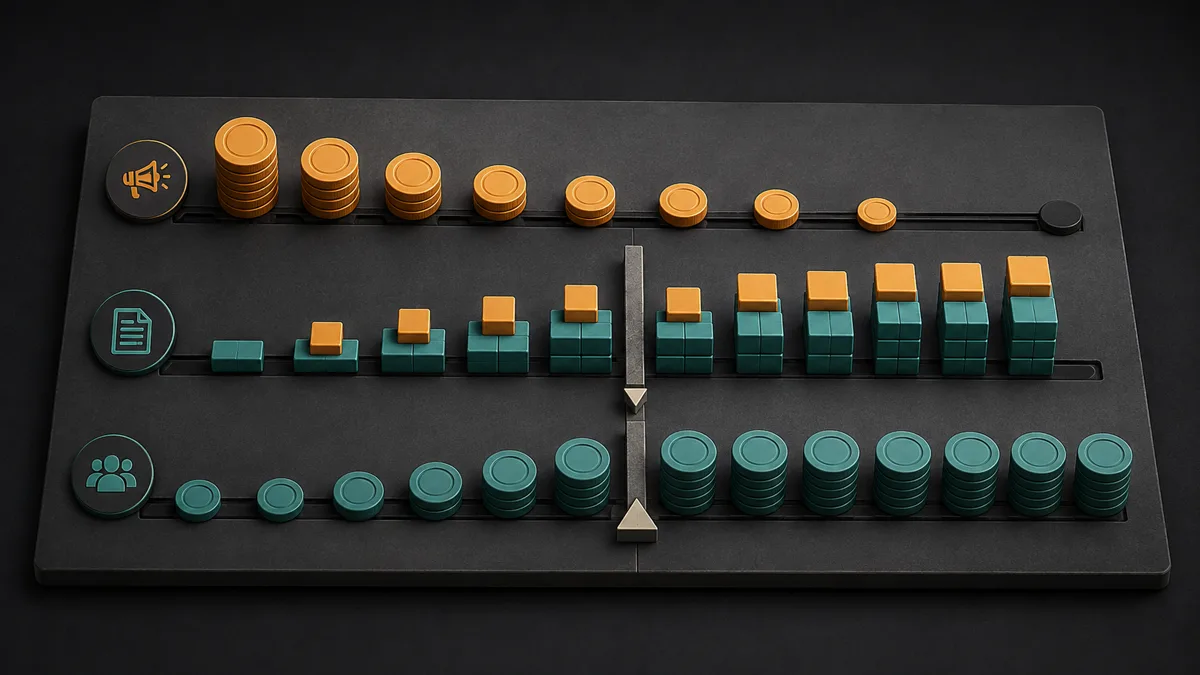
That is the honest comparison: paid ads have recurring marginal cost per click. Organic assets have upfront and ongoing costs that can compound across discovery, trust, and conversion.
The Break-Even Question Owners Should Ask
The better question is not “Should I do SEO or ads?” It is “Where does each dollar create the most durable customer acquisition advantage?”
Start with the paid side. If a click costs $62.08 and your landing page converts 3% of visitors into leads, then 100 clicks produce about three leads at $2,069 in ad spend per lead before management fees, creative work, sales time, or unqualified inquiries. If one in three leads becomes a customer, the implied ad spend is about $6,208 per customer. That could be brilliant for a $40,000 service. It could be absurd for a $700 job. Math is rude like that.
Then look at the organic side. If a page, cluster, or service section costs $2,500 to research, write, design, implement, and improve, it does not need to produce miracles to compete with high-CPC rentals. It needs to attract qualified visitors, answer buyer questions, support recommendations, and help more people convert over time. If it keeps working for months, the economics can improve with every qualified visit it influences.
But time matters. Paid ads can create traffic this week. Organic work may take weeks or months to show enough signal. Google has repeatedly framed useful content and site quality as long-term work, not a vending machine where you insert one blog post and receive rankings with snacks (https://developers.google.com/search/docs/fundamentals/creating-helpful-content).
Where AEO Changes the Value of the Page
AEO and AI visibility add another reason to build durable pages: buyers are not only clicking blue links. They are asking AI tools to compare options, explain tradeoffs, summarize companies, and shortlist providers. If your site has thin service pages and vague blog posts, AI systems have less to retrieve, less to understand, and less to cite.
That does not mean every page needs to be an encyclopedia with a contact form duct-taped to the bottom. It means revenue-critical pages need clear definitions, use cases, proof, pricing context when appropriate, FAQs, comparison language, and internal links to related evidence. The same assets that help search engines understand your business also help buyers understand why they should care.
This is where SEO and AEO overlap in practical terms. You are not optimizing for a robot because robots have wallets. You are making the business easier to discover, evaluate, trust, and choose when a human uses a search engine or AI answer as the middleman.
When Google Ads Still Make Sense
Paid search still has a place. Use it when speed matters, when you need to test whether an offer converts, when you have a strong landing page, or when the economics are clear enough to tolerate the click cost. A new service launch, seasonal promotion, emergency-service campaign, or high-margin offer may justify paid traffic while organic assets are being built.
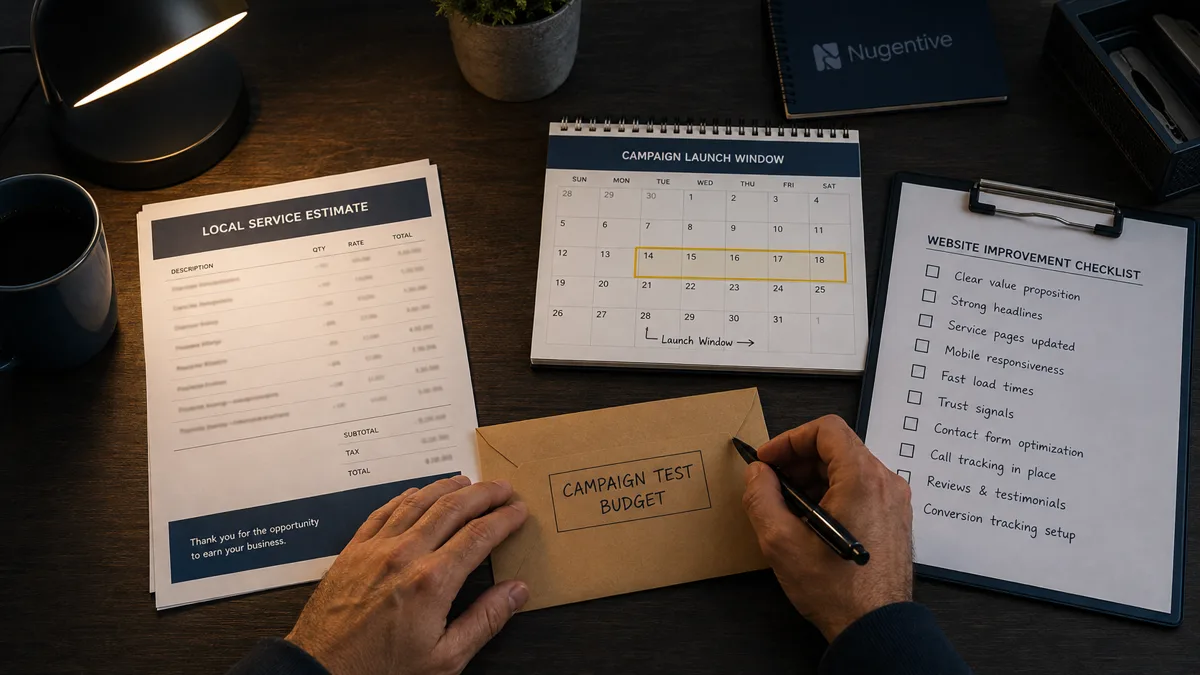
The mistake is using ads to compensate forever for pages that do not explain the business. If the website cannot convert qualified visitors, buying more visitors mostly accelerates disappointment. Very efficient disappointment, but still.
Use ads to test and capture demand. Use SEO and AEO to build the durable explanation layer around the business: service pages, comparison answers, proof, technical accessibility, local/entity consistency, and content that maps to real buyer questions.
A Simple Decision Framework
Before spending more on paid clicks, ask five questions:
- What does one click cost in this market, and is that number an estimate or actual account data?
- What percentage of paid visitors become qualified leads?
- What percentage of qualified leads become customers?
- Which page or offer asset could reduce confusion, increase trust, or support organic discovery if improved?
- How long can the business wait for compounding visibility before it needs immediate demand?
If you cannot answer those questions, the next dollar should probably go toward measurement and page improvement before more traffic. Traffic is gasoline. A weak conversion path is a bucket with a motivational slogan on it.
The Bottom Line
Organic traffic vs paid traffic cost is not a moral debate. It is a capital allocation decision. Paid ads rent attention quickly and can be profitable when the offer and conversion math work. SEO and AEO require more patience, but they can build assets that support search visibility, AI recommendations, buyer trust, and sales conversations without charging you again for every single visit.
The smartest owners usually do not choose one forever. They use paid search where speed and testing justify the cost, then build organic assets so the business is not permanently dependent on renting every opportunity.
If your ad spend keeps rising while leads stay flat, the problem may not be the auction. It may be the pages, proof, and AI visibility signals underneath it. A paid AI Visibility Audit can show which fixes are most likely to protect revenue before another round of clicks turns into a very expensive shrug.