Why "You Don't Need Schema for AI" Is the Wrong Take
There's a recurring argument floating around right now: schema markup is unnecessary because LLMs were trained to read websites as they are. On the surface, that sounds plausible. It's also wrong.
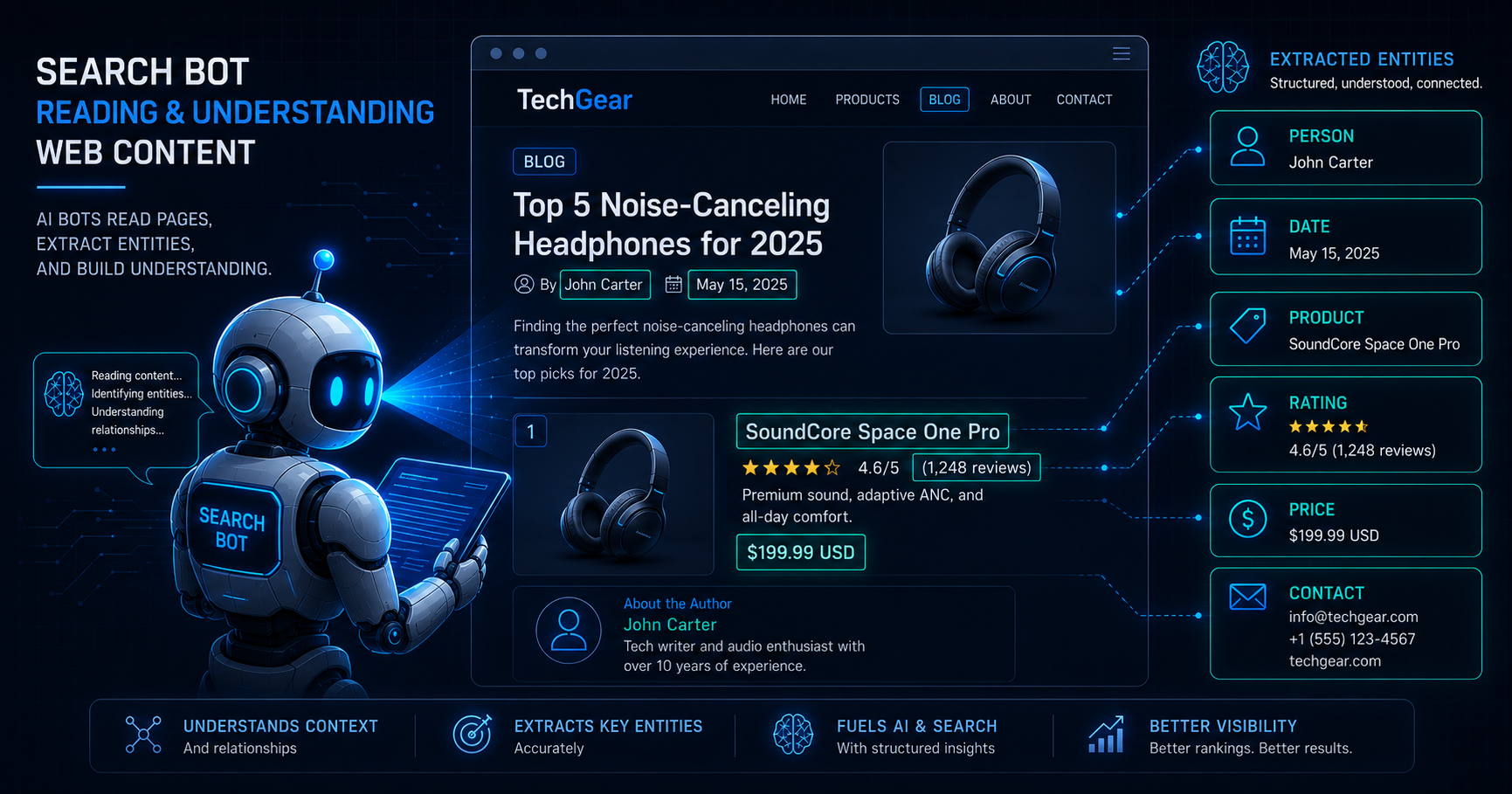
The argument confuses two very different things, model training and machine extraction. A large language model can process plain web content. That does not mean structured data has no value, and it does not mean the absence of schema is irrelevant to the AI systems that retrieve, classify, summarize, and cite your business.
If your strategy is being visible in AI-driven search, schema is still a serious advantage.
The Core Mistake in the Argument
The mistake is assuming that because an LLM can read unstructured text, it has no need for structured signals. That's like saying because a person can read a messy paragraph, there's no value in headings, labels, or tables.
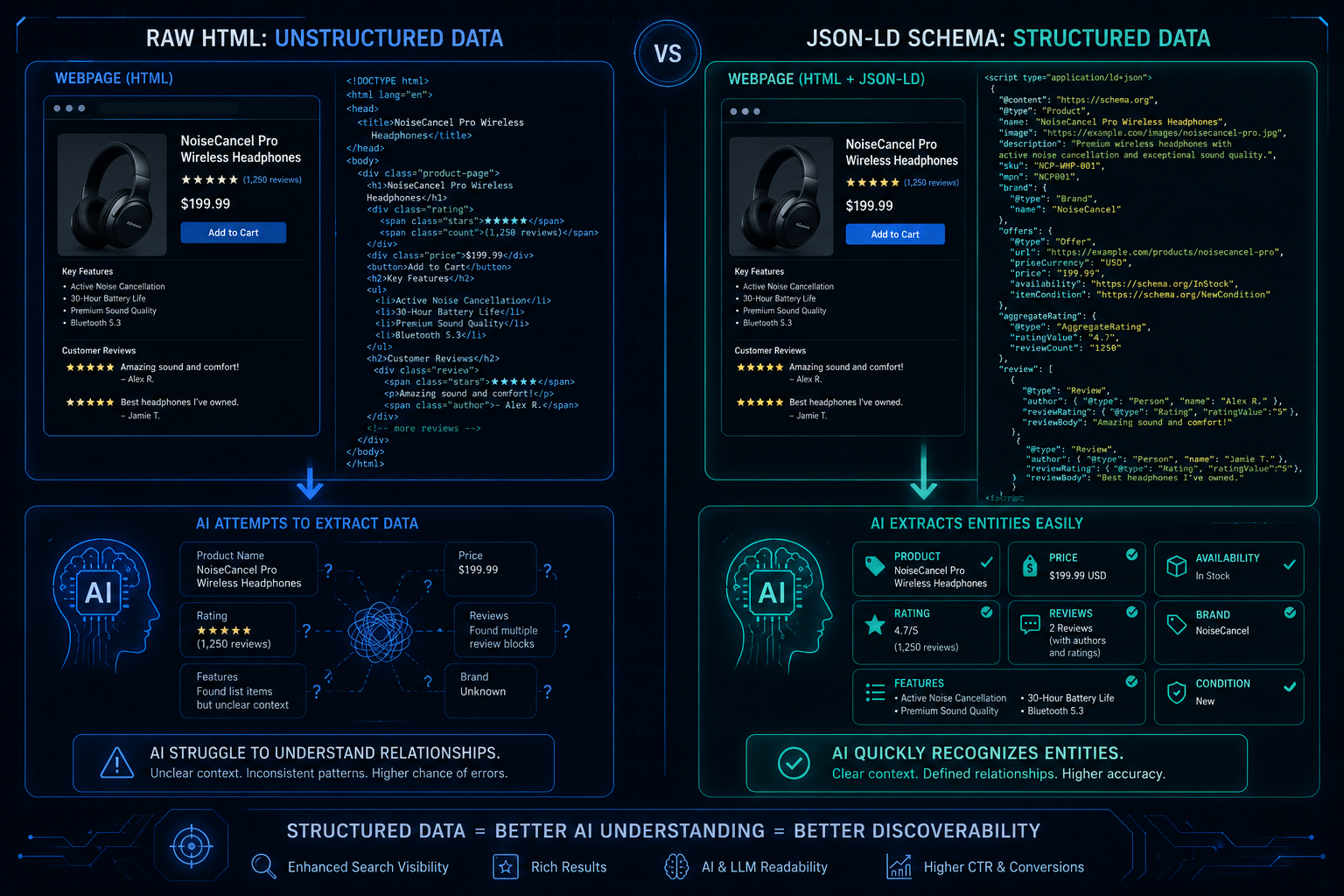
Yes, an LLM can usually infer meaning from raw HTML or page text. But inference is not the same as precision. Schema reduces ambiguity. It tells systems what the page is, who the entity is, what the content means, and how the parts relate to each other. That matters when the goal is not just "understanding" but reliable extraction.
LLMs can infer meaning from plain content. Schema removes the guesswork.
What Schema Actually Does for AI Visibility
If your business cares about being surfaced accurately in search engines, AI summaries, answer engines, and retrieval-based systems, schema is doing real work behind the scenes.
It helps with:
Entity clarity, telling systems what your business is
Page-type classification, distinguishing a service page from a blog post from a product listing
Fact extraction, making prices, hours, ratings, and contact details lift cleanly
Relationship mapping, connecting your business to its services, locations, and people
Consistency across a site, so machines see one coherent entity, not fragments
Eligibility for enhanced search features, rich results, knowledge panels, AI Overviews
Schema is not magic. It does not guarantee rankings. It does not force ChatGPT to cite you. But it gives systems a cleaner signal to work with, and in AI search, cleaner signals usually win.
"LLMs Can Read Websites" Is Only Half True
This is where the argument gets sloppy. LLMs do not magically browse the live web the way a human does. They interact with content through pipelines, crawlers, indexes, retrieval layers, extraction systems, and search integrations.
That means schema can influence outcomes even if the model itself is not "reading" schema the way a browser renders it. Structured data improves how systems identify page intent, isolate entities, and populate answer surfaces. The model may not need schema to parse a sentence, but the wider AI search stack absolutely benefits from it.
AI Extraction Is the Real Use Case
If your strategy is AI extraction, schema becomes more important, not less. You are not just trying to rank a page; you are trying to make information easy to lift, label, and reuse correctly.
The real question is not "Can an LLM understand a page without schema?" The real questions are:
Can it extract the right entity?
Can it separate the important facts from the noise?
Can it understand what kind of page this is?
Can it do that consistently across your site?
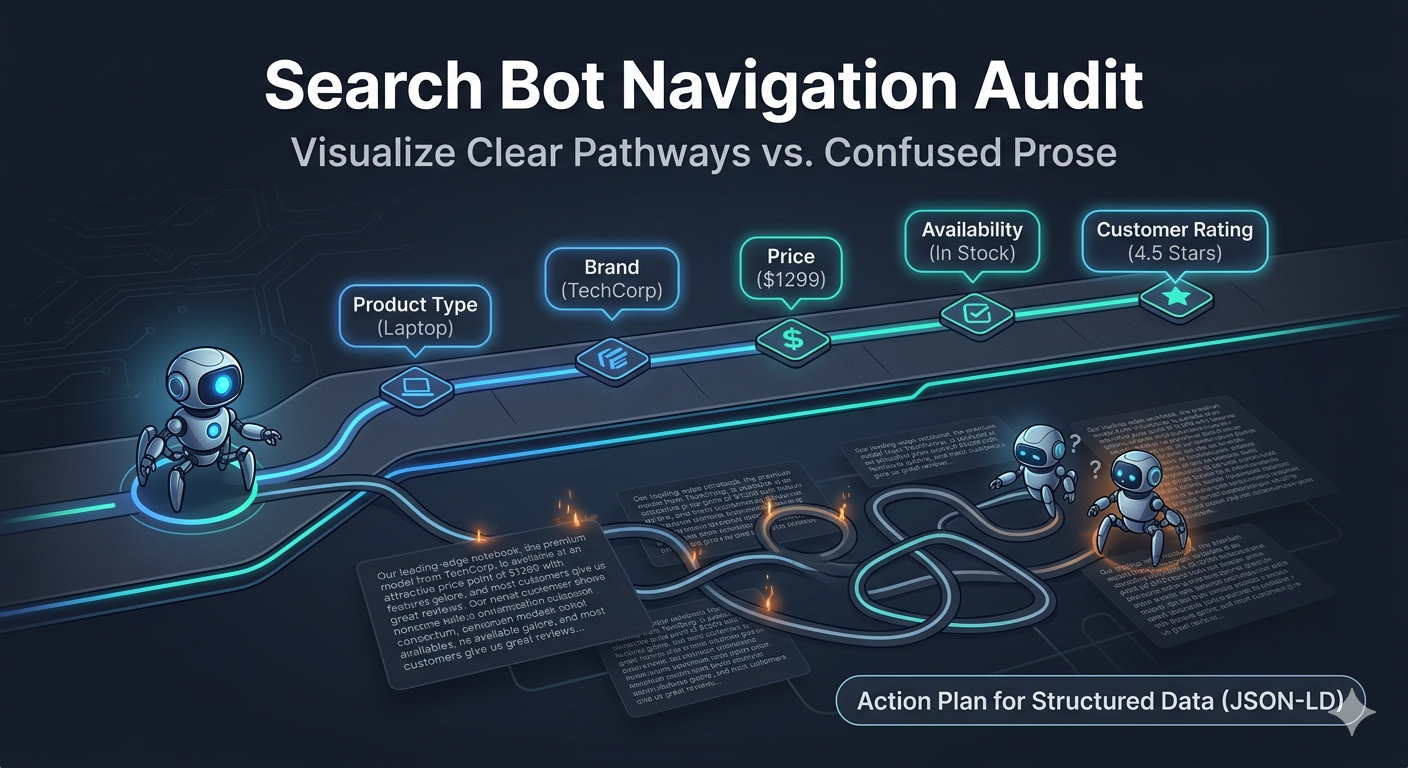
Schema helps answer those questions. A clean schema implementation is like giving the machine a map instead of making it wander your website hoping it figures things out.
Four Examples That Show the Difference
The clearest way to see why schema still matters is to look at what changes between an unmarked page and a marked one.
Local Business Page
Without schema, a page might say: "We're open Monday to Friday, 9 to 5, at 123 Main Street, Calgary." An LLM can infer this is a business with hours, an address, and a likely local audience. With schema, the page explicitly declares LocalBusiness, address, openingHours, geo, and telephone. Instead of inferring meaning from prose, a machine extracts those fields directly with higher confidence. For a business trying to show up in "best plumber in Calgary" type queries, that precision is the difference between being a candidate and being skipped.
Product Page
Without schema, a product page might say: "This blender is $89.99, ships in 2 days, and has 4.8 stars from 211 reviews." An LLM can probably identify the price, shipping, and rating. With schema, those facts package as Product, Offer, and AggregateRating. Retrieval systems pull the exact fields they need instead of parsing them from surrounding text, which matters when the page also contains promotional copy, disclaimers, or multiple products.
Service Page
Without schema, a page might say: "We offer SEO audits, AEO consulting, and content optimization for SaaS companies." An LLM can infer this is a services site targeting SaaS. With Service, Organization, areaServed, and serviceType, those distinctions become explicit. That reduces the chance a model treats your service page as a blog post or general informational page when it is actually a sales-intent offering.
Article or FAQ Page
Without schema, a well-structured article with clear headings can already be easy for an LLM to understand. With Article, FAQPage, or HowTo, you add an explicit labeling layer that helps downstream systems classify the page and extract the most relevant parts. This is where FAQPage schema does its heaviest lifting; it is one of the strongest signals for question-answer extraction in AI search.
Not All Schema Is Equal
Another problem with the "schema doesn't matter" argument is that it treats schema as one generic thing. That's too simplistic.
Some schema types are far more useful than others depending on the page and the business model:
OrganizationandLocalBusinessestablish entity identityBreadcrumbListhelps map site structureFAQPagesupports question-answer extraction directlyArticle,Product,Service, andHowToclarify content type and purposesameAsreinforces entity connections across the web
The point is not schema for decoration. The point is making the site machine-readable in ways that actually support the business.
The Better Standard: Relevance and Accuracy
I would not score schema by volume. That's the wrong metric. What matters is whether the markup is relevant, accurate, complete, and aligned with the visible page content. A site with a few well-implemented schema types beats a site with a pile of sloppy or irrelevant markup every time.
The right position is not "schema everywhere" and it is not "schema doesn't matter." The right position is:
Use schema where it supports the page intent
Implement it accurately
Keep it aligned with the visible content
Prioritize the types that help extraction and entity clarity
Why This Still Matters for AEO and SEO
If your audits are built around AEO and AI visibility, schema should remain a meaningful part of the scoring model. Not as a vanity metric, but as a structural signal that affects how machines interpret your site.
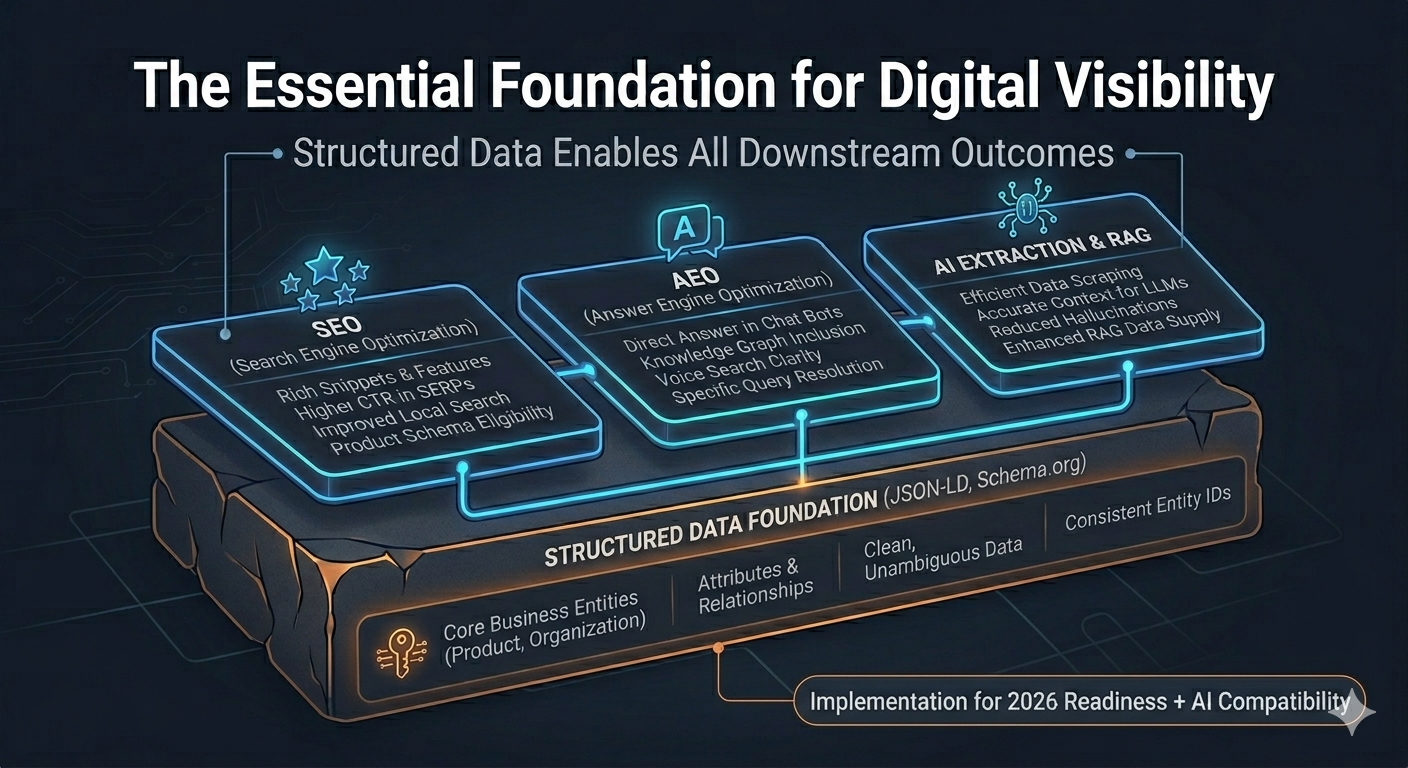
For traditional SEO, schema helps with search features and context. For AEO, schema helps with answer eligibility and clarity. For AI extraction, schema helps reduce ambiguity and improve confidence in what the system pulls from the page. That is not a minor detail; it is part of the infrastructure of visibility.
Final View
The "no need for schema" argument is too broad and too confident. LLMs can process unstructured content. That does not mean structured data has no value.
Schema is not required for basic comprehension, but it is still highly relevant for extraction, classification, entity understanding, and machine readability. If your goal is being understood accurately by search engines and AI systems, schema is not optional fluff; it is part of the foundation.
In a world where AI systems are increasingly deciding what gets surfaced, summarized, and cited, clear structure is not a luxury. It is an advantage.
If you want to see how your site stacks up across schema, content extractability, and AI crawler access, you can run a free AEO audit and get a score in just minutes.