One Business Should Not Have Five Versions of the Truth
Brand consistency in AI search is not a cosmetic branding exercise. It is the practical work of making your current business facts agree across your website, profiles, directories, press mentions, review platforms, and other sources a customer or retrieval system may consult.
When those sources disagree, a buyer may see an old address, outdated service, former executive, wrong phone number, or description that no longer fits the company. That creates friction at the exact moment someone is deciding whether to call, visit, request a quote, or keep scrolling. AI did not invent this problem. It simply became another place where the contradiction can surface quickly and confidently, which is a delightful combination when the answer is wrong.
A recent Search Engine Journal analysis framed conflicting brand information as a major AI search risk. Its central point was that outdated answers can persist not because the web lacks information, but because several versions exist and the source matching the customer’s wording may be old (https://www.searchenginejournal.com/biggest-ai-search-risk-is-conflicting-information/586904/). That is a useful diagnosis, not proof that every incorrect answer has the same cause.
Why Conflicting Information Can Cost Real Customers
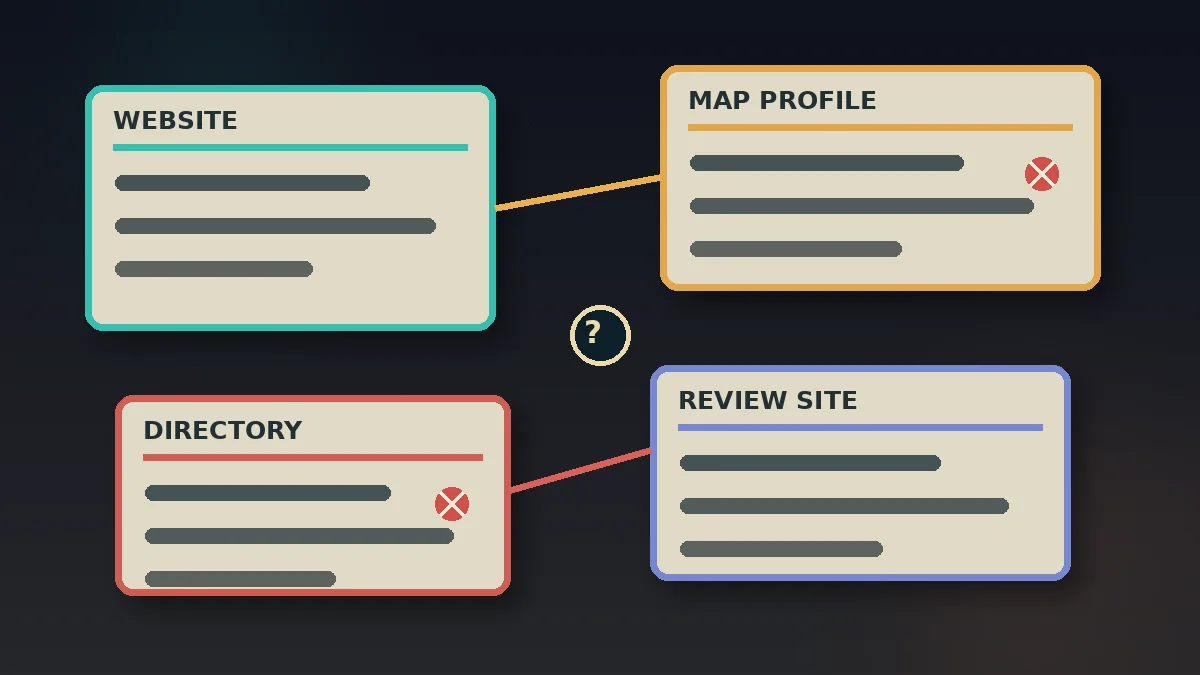
Imagine a customer asks an AI assistant whether your company serves her neighborhood. Your website says yes. An old directory lists a smaller service area. A review platform still shows your former location. A press release uses the legal parent-company name while your storefront uses the trading name. The customer does not care which database won the argument. She cares whether she can trust the answer enough to contact you.
The direct business cost is not merely “bad data.” It can be a lost call, a navigation mistake, a buyer choosing a competitor with clearer information, or a sales conversation spent correcting details that should have been obvious. For multi-location and rebranded companies, the risk grows because old names, former addresses, acquired businesses, and overlapping phone numbers create more ways for sources to disagree.
This matters beyond AI answers. Google’s Business Profile guidelines tell businesses to represent themselves consistently with how they are recognized in the real world across signage, stationery, and branding. The guidance also says the profile name should reflect the real-world name used on the storefront, website, and stationery (https://support.google.com/business/answer/3038177). That is not an AI citation trick. It is basic customer clarity, and basic customer clarity travels well.
What Brand Consistency in AI Search Actually Covers
Consistency does not mean copying one identical sentence everywhere. It means the underlying facts and relationships remain clear even when each platform uses different fields or formats.
Start with the facts that can stop a customer from buying:
- Business name, trading names, and former names
- Primary address, location pages, and service areas
- Phone numbers, email addresses, and booking links
- Current services, products, and customer types
- Hours, availability, and important operating restrictions
- Leadership, ownership, parent-company, and acquisition relationships
- Credentials, licenses, awards, and dates
- Pricing or offer details that customers may compare
A directory may need a short category and address, while your About page explains the company story. Those pages do not need matching prose, but they should not describe different realities.
Use the Source-of-Truth and Bridge Method
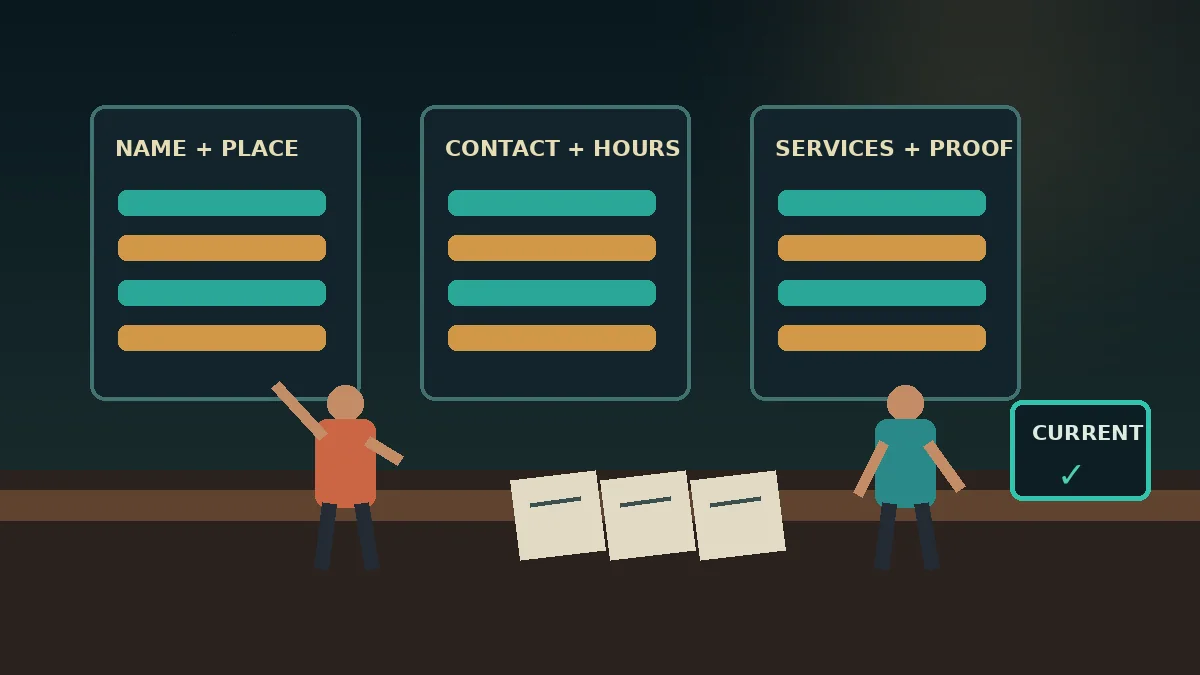
The practical fix has two parts. First, establish a current source of truth. Second, build bridges from old language and identities to the current facts.
1. Establish one approved fact sheet
Create a simple internal record that names the current business facts, who owns each fact, where it appears, and when it was last verified. Include old names and details that customers may still use. This does not need a majestic software platform with twelve dashboards. A controlled document with an owner and review date beats an impressive system nobody updates.
For each fact, decide which page on your website is authoritative. Organization details usually belong on the home or About page. Location facts belong on individual location pages. Service boundaries belong on service pages. Leadership and acquisition changes need a permanent explanatory page, not only a social post that disappears into the feed.
Google says Organization structured data on a home or About page can help it understand administrative details and disambiguate an organization in search results (https://developers.google.com/search/docs/appearance/structured-data/organization). Use relevant properties that match the visible page. Structured data supports the source of truth; it does not excuse contradictory visible content elsewhere.
2. Bridge old terms to the current reality
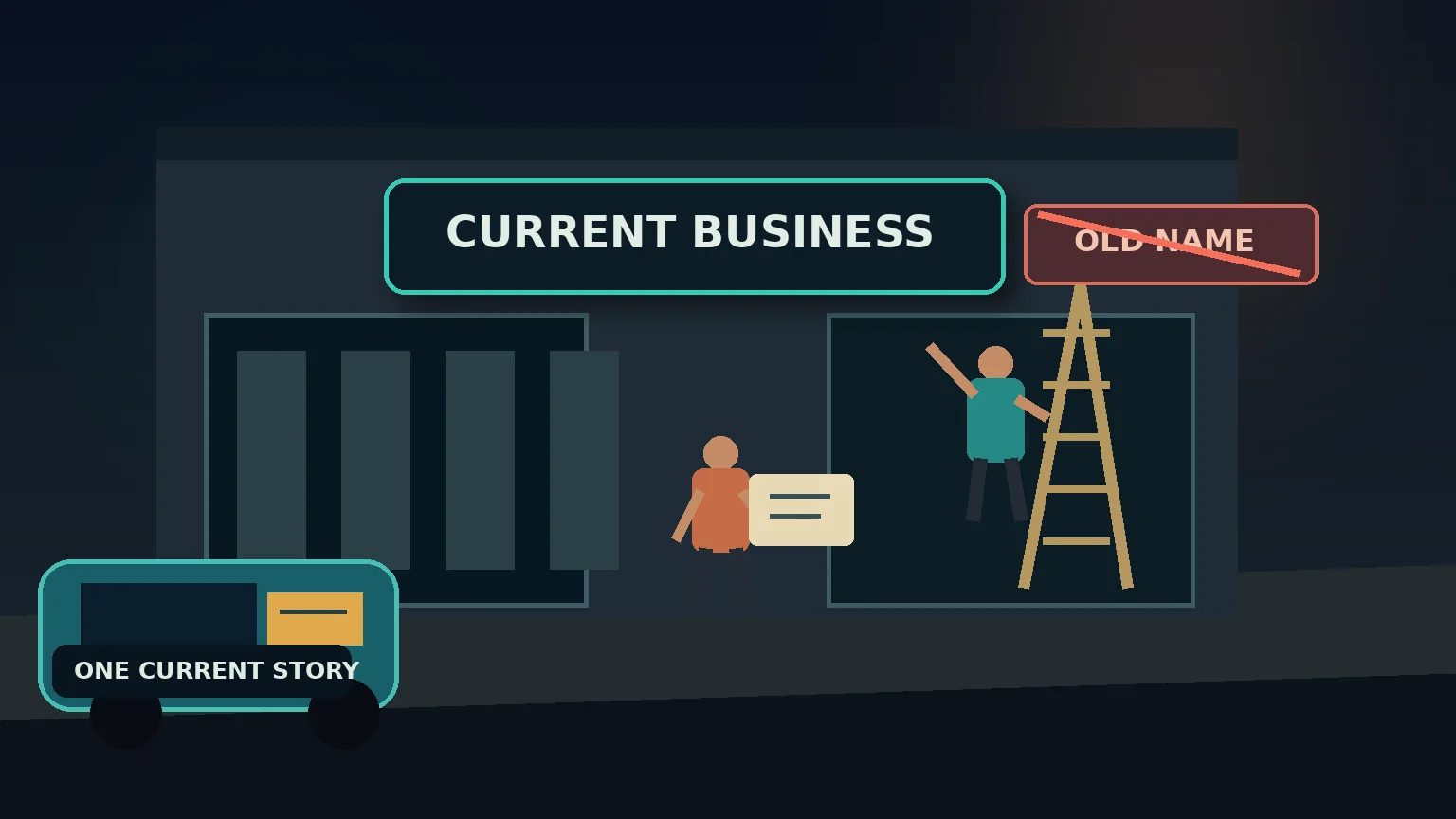
If customers still search an old company name, former product name, previous address, or outdated executive title, do not erase every reference and assume the internet received the memo. Publish a clear connection: “Old Name is now Current Name,” “We moved from X to Y,” or “This service is now provided through Z.”
The Search Engine Journal analysis calls this bridge content: current material that connects obsolete wording to the present organization. That is especially useful after a merger, acquisition, leadership change, relocation, or major service shift. The bridge helps a human understand the change and gives retrieval systems a current source that includes the language still used in older questions.
Run a Customer-First Consistency Audit
Do not begin by trying to clean the entire internet before lunch. Start with the sources most likely to influence a customer decision.
- Search the business name, former names, phone number, and address.
- Check the home, About, contact, service, location, pricing, and leadership pages.
- Review Google Business Profile, major industry directories, review sites, and social profiles.
- Ask several realistic buyer questions in the AI systems your customers use, then record the claims and cited sources.
- Mark each important fact as current, outdated, incomplete, or conflicting.
- Fix the owned website first, then high-impact third-party profiles you can control.
- Request corrections from publishers or platforms where material errors remain.
- Add bridge content when old language still has legitimate search or customer demand.
- Recheck the same questions after changes, without assuming one edit will propagate everywhere immediately.
Prioritize errors by customer impact. A wrong phone number deserves attention before a slightly stale company description. An incorrect service area beats an old team photo. A false claim about licensing or pricing can be more damaging than both. The goal is not a perfect spreadsheet; it is fewer reasons for a qualified customer to hesitate or leave.
Common Fixes That Do Not Fix the Problem
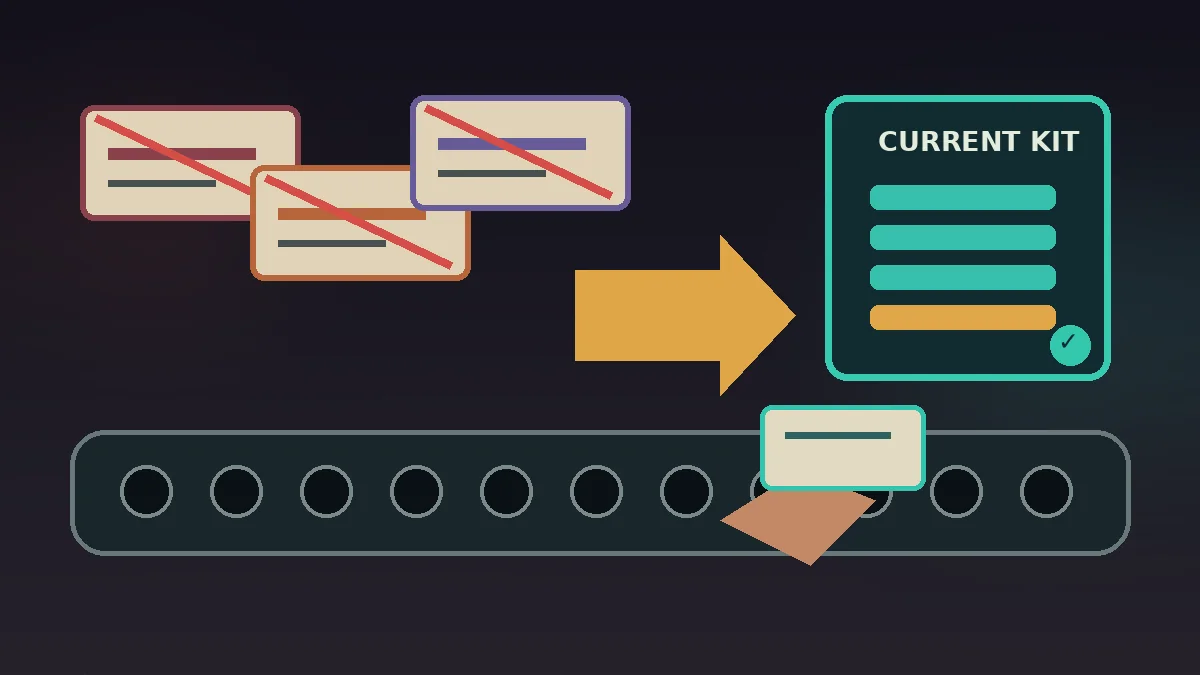
Publishing ten new blog posts will not reliably resolve five contradictory versions of a core fact. More pages can create more places to maintain and more opportunities for drift. Content volume is a poor substitute for information governance, although it does keep the editorial calendar looking very busy.
Adding schema alone is not enough either. Google’s guidance for AI features says ordinary SEO best practices remain relevant, there are no additional technical requirements for AI Overviews or AI Mode, and there is no special schema required (https://developers.google.com/search/docs/appearance/ai-features). Schema should describe accurate visible information. It is not a correction fluid for the rest of the web.
Deleting old pages without a plan can also make matters worse. Some have links, historical value, or language customers still use. Update, redirect, or annotate them based on whether a current replacement exists.
Finally, do not treat every wording difference as a crisis. “Heating contractor” and “HVAC company” can both describe the same business. The meaningful question is whether a customer can resolve the entity, understand what it does, and act on current facts without running into a contradiction.
Make Accuracy Someone’s Job
Brand accuracy decays because every team assumes another team owns it. Marketing updates the website. Operations changes the hours. HR changes leadership. A location manager edits a profile. A directory imports last year’s record. Six months later, the business has developed multiple personalities.
Assign an owner for core business information and set a review cadence. High-change facts such as hours, offers, locations, leadership, and service coverage may need event-driven updates plus regular checks. Stable details can be reviewed less often. Keep a change log so the person correcting profiles knows what changed, when, and where the old version may still appear.
Brand consistency in AI search will not guarantee a citation or recommendation. It does remove avoidable ambiguity and reduce the chance that customers encounter stale facts during a decision. That is worthwhile even if every chatbot on earth takes the afternoon off.
If you are unsure which contradictions are costing trust, a paid AI Visibility Audit can trace important buyer questions back to the pages, profiles, and source gaps that need attention first. The point is not to clean every mention on the web. It is to fix the facts most likely to lose the next customer.