
Voice Search Is Becoming a Buyer Habit
Google Gemini passing 1 billion monthly users is the headline. The more useful detail for local businesses is quieter and much more annoying: Search Engine Journal reported that Google says 63% of Gemini app users now use voice (https://www.searchenginejournal.com/google-gemini-passes-1b-monthly-users-63-now-use-voice/585624/).
That does not mean every customer is suddenly whispering sweet nothings to an AI assistant before hiring a plumber. It does mean more buyers are getting comfortable asking complete, messy, spoken questions instead of typing neat little keywords.
For owners, the practical question is not “How do we optimize for Gemini?” That is how marketing rabbit holes get furnished. The better question is: when someone asks an AI assistant for a business like yours, can the system find clear facts, trust signals, and a next step fast enough to recommend you?
Why Voice Changes the Customer Question
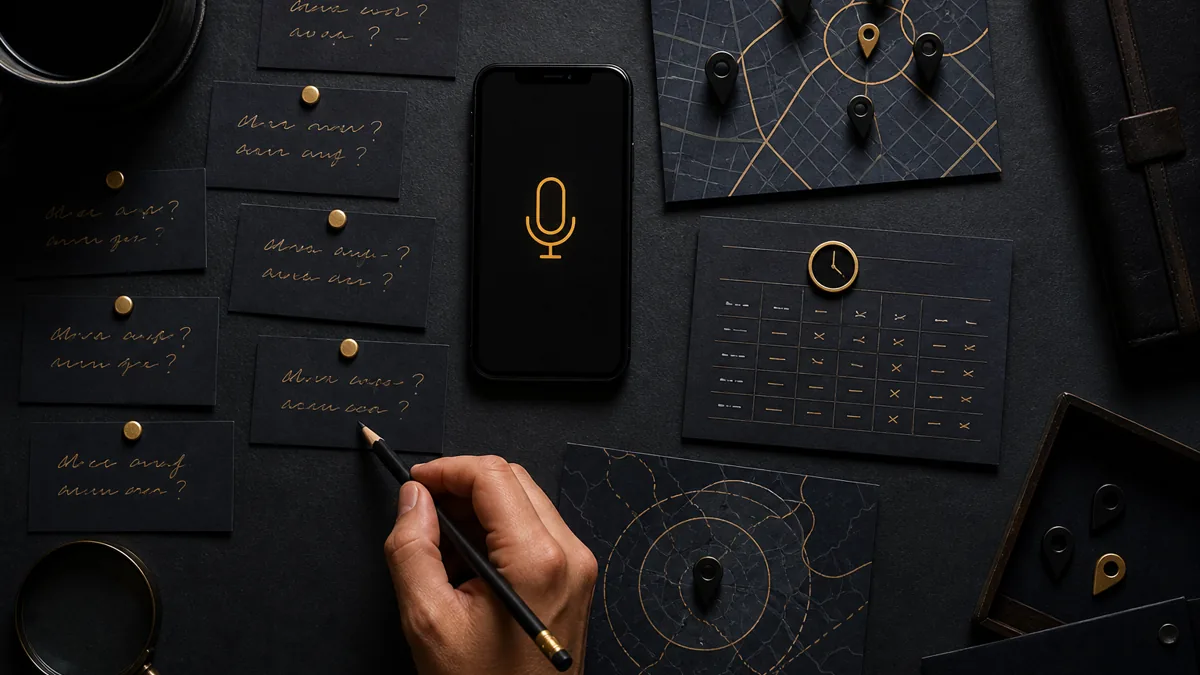
Typed search often compresses intent into fragments: “roofer near me,” “emergency dentist,” “best HVAC repair.” Voice search expands the question back into human language.
A buyer may ask, “Who can fix a leaking roof in Fort Worth this week and has good reviews?” or “Which pediatric dentist near me is open after school?” or “Find a marketing consultant who can explain why my website traffic is down but leads are not improving.” Very rude of customers to be specific. Also extremely useful if your website and profiles answer clearly.
Voice-led AI search rewards clarity because the assistant has to turn a conversational question into a confident answer. Google’s AI features guidance still points site owners back to normal Search fundamentals: make useful content accessible, eligible for snippets, and aligned with what people need (https://developers.google.com/search/docs/appearance/ai-features). Google’s helpful content guidance also emphasizes useful, reliable, people-first content rather than material made mainly to attract search traffic (https://developers.google.com/search/docs/fundamentals/creating-helpful-content).
The owner translation is simple. If your public information is vague, inconsistent, or thin, you are asking AI systems to fill in the gaps. They may decline. They may recommend a competitor. They may produce a half-right answer that sends the buyer somewhere else. None of those options are famous for increasing revenue.
AI Voice Search Still Needs Evidence
Voice may feel new, but the underlying visibility problem is familiar. AI systems still need retrievable sources: your website, Google Business Profile, Bing and Apple listings, reviews, directories, social profiles, and third-party mentions.
Google’s Business Profile help documentation says owners can add and edit key business information such as hours, attributes, photos, services, and contact details (https://support.google.com/business/answer/7091). That is not glamorous work. It is also the kind of work that helps a human buyer and a machine answer basic questions without guessing.
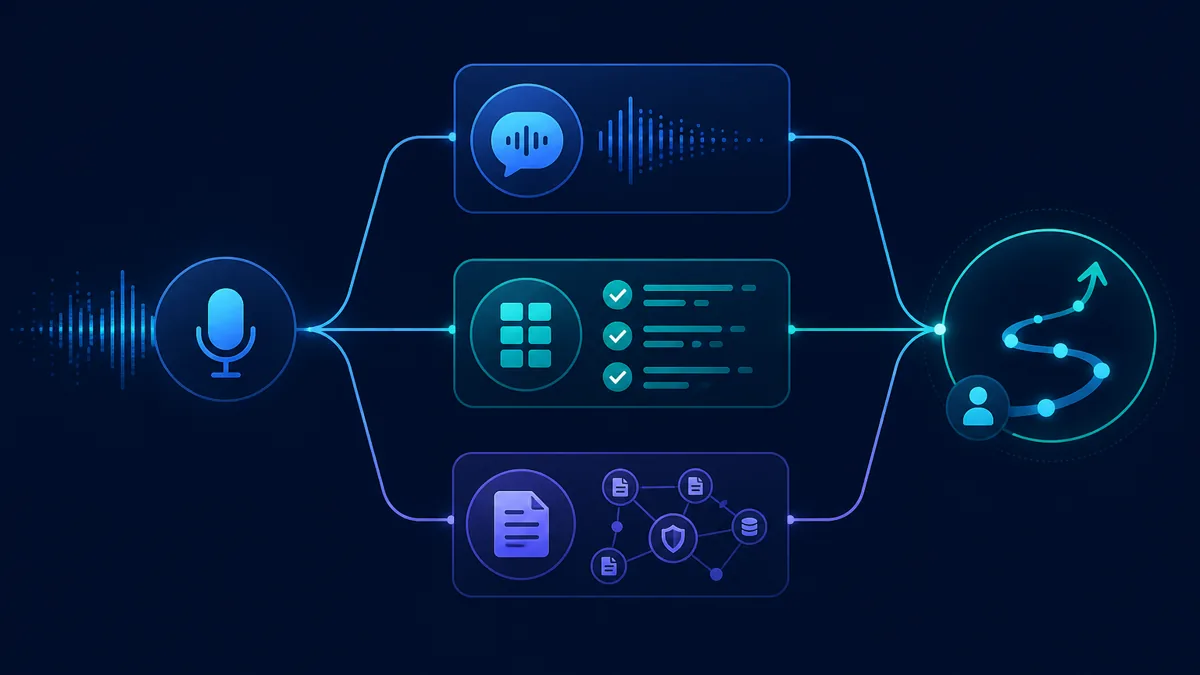
Think in four layers.
The spoken question
Voice queries tend to include context: urgency, location, budget, family situation, service type, availability, or trust concern. Your content should reflect real buyer questions, not just keyword fragments. A page that says “professional solutions” twelve times is not answering whether you offer same-week appointments, serve a specific suburb, or handle a specific problem.
The business facts
AI systems need consistent facts. Name, address, phone, hours, service area, services, categories, appointment links, and pricing context should line up across your site and major profiles. If your website says one thing and your listings say another, congratulations, you have built a small ambiguity machine.
The proof
Reviews, photos, examples, credentials, policies, case details, warranties, staff information, and local relevance help support a recommendation. Voice answers often need a short reason why a business fits. “They exist” is a weak reason. “They handle emergency repairs in this area, have recent reviews mentioning fast response, and show clear booking steps” is better.
The action path
The assistant may influence the choice, but the customer still needs to act. Call, book, request a quote, get directions, compare services, or ask a follow-up question. If the next step is buried behind a slow page, broken form, or mysterious “contact us” maze, the visibility win leaks out the bottom.
What Local Businesses Should Fix First
Do not start by inventing a new “voice SEO” department. Start by making the business easier to understand, verify, and choose.
- Write down the ten spoken questions a real customer might ask before choosing you.
- Check whether your homepage, service pages, and profiles answer those questions directly.
- Fix mismatched hours, categories, phone numbers, service areas, and booking links.
- Add specific service details: who it is for, what is included, where it is available, and what happens next.
- Strengthen proof with recent reviews, photos, project examples, credentials, and policies.
- Make the conversion path obvious on mobile.
- Test the experience like a customer in a hurry, not like the owner who already knows where everything lives.
The important phrase there is “customer in a hurry.” Voice search often happens while someone is walking, driving, multitasking, or trying to solve a problem quickly. They are not admiring your brand manifesto. They need the answer, the confidence, and the next step.
Common Mistakes With Voice AI Visibility
The first mistake is treating voice search like a separate universe. It is not. It is another interface layered on top of the same messy evidence ecosystem. Your website, profiles, reviews, and local authority still matter.
The second mistake is stuffing pages with awkward spoken phrases. Please do not publish a page that says, “Hey Gemini who is the best emergency plumber near me in Denver Colorado question mark.” Somewhere, a copywriter loses a tiny piece of soul every time that happens.
The third mistake is ignoring business profiles. For local intent, profiles often carry the facts customers care about most: location, hours, reviews, photos, categories, and calls to action. If those are neglected, your beautifully written website is doing extra push-ups to compensate.
The fourth mistake is measuring only clicks. AI and voice experiences may influence customers before they visit your site. Track calls, direction requests, bookings, branded searches, review activity, assisted conversions, and the quality of questions coming into your sales process. Clicks still matter. They are no longer the whole story.

How Nugentive Thinks About This
Nugentive’s view is boring in the useful way: voice AI visibility is not about tricking Gemini, ChatGPT, or Google into saying your name. It is about making the business retrievable, understandable, trusted, cited, and easy to act on across the sources AI systems use to form answers.
That means the work is partly technical, partly content, partly reputation, and partly conversion cleanup. Robots and crawlers need access. Pages need meaning. Profiles need consistency. Reviews and examples need substance. Customers need a clear path to money-changing-hands behavior, which is generally the point of this whole exercise.
A strong AI Visibility Audit should not hand you a magical prompt list and call it strategy. It should show where your business is unclear, where evidence is missing, where customer actions break down, and which fixes are most likely to affect leads and revenue.
The Bottom Line
Gemini voice adoption is a useful signal because it shows customers are getting more comfortable asking AI systems natural, specific questions. Local businesses do not need to panic. Panic is a poor operating system and an even worse marketing plan.
They do need to prepare for a search journey where the first interaction may be spoken, summarized, and filtered before the buyer reaches a website.
If your business facts are consistent, your services are specific, your proof is visible, and your next step is obvious, voice AI search becomes less mysterious. It becomes another path where a good customer can understand why you are the right choice and act before your competitor gets the call.