
Links Are Receipts, Not Reputation
AI search link building is not about collecting the biggest pile of backlinks and hoping ChatGPT mistakes volume for trust. That worked poorly enough in classic SEO when agencies sold “authority” by the spreadsheet. In AI search, it gets even thinner because answer systems need evidence they can use to explain why a business deserves to be recommended.
Search Engine Land reported that the traditional link building model is breaking down for AI search, especially when high-DR links, paid mentions, and link exchanges create the appearance of authority without giving AI systems enough credible context to recommend a brand (https://searchengineland.com/traditional-link-building-model-no-longer-works-ai-search-484530). That is the right problem to stare at for a minute.
A link can still help discovery. A mention can still help credibility. But a link that says nothing useful about your business is a weak signal. It is the marketing equivalent of someone pointing at you from across the room and refusing to explain why.
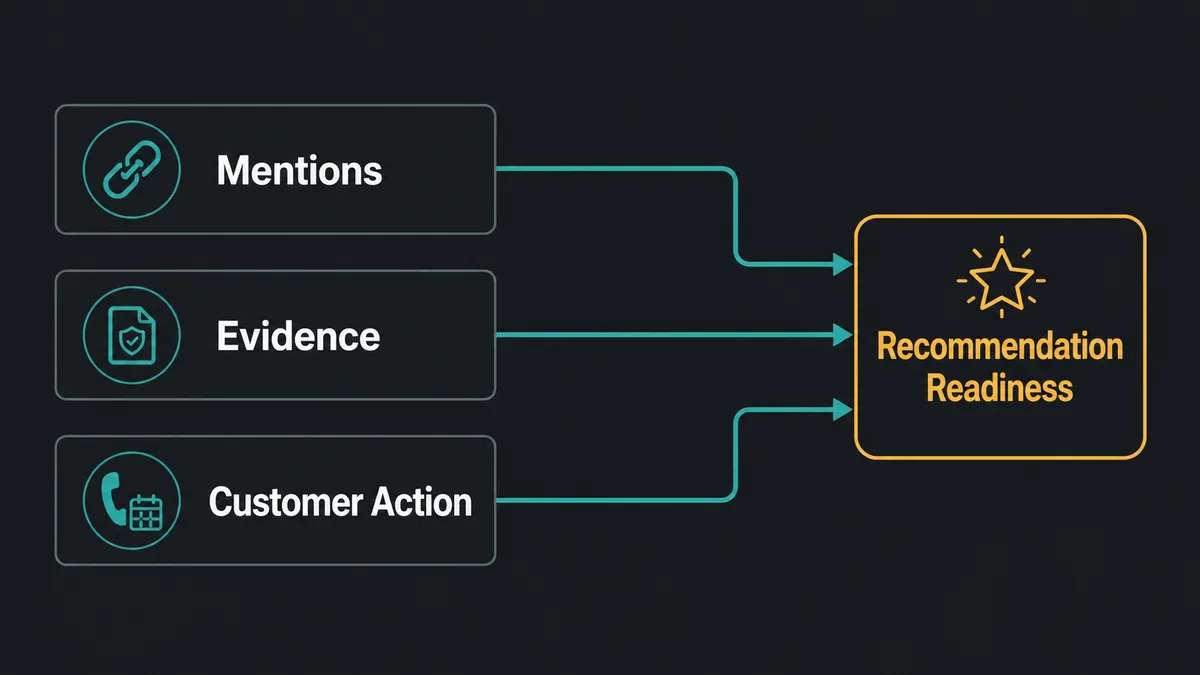
For owners, the practical question is not “How many links did we build?” It is “Do the sources around our business make it easier for customers and AI systems to understand why we are credible, relevant, and worth contacting?”
Why Old Link Metrics Mislead Owners
Traditional link reporting often leans on domain rating, domain authority, number of placements, anchor text, and whether the link is followed. Those can be useful diagnostics. They are not the same as customer trust. They are also not the same as recommendation readiness.
Google’s spam policies warn against link spam, including buying or selling links for ranking purposes and excessive link exchanges (https://developers.google.com/search/docs/essentials/spam-policies). So if the strategy is “buy authority from sites nobody’s customers read,” congratulations, you may have recreated a risk with an invoice.
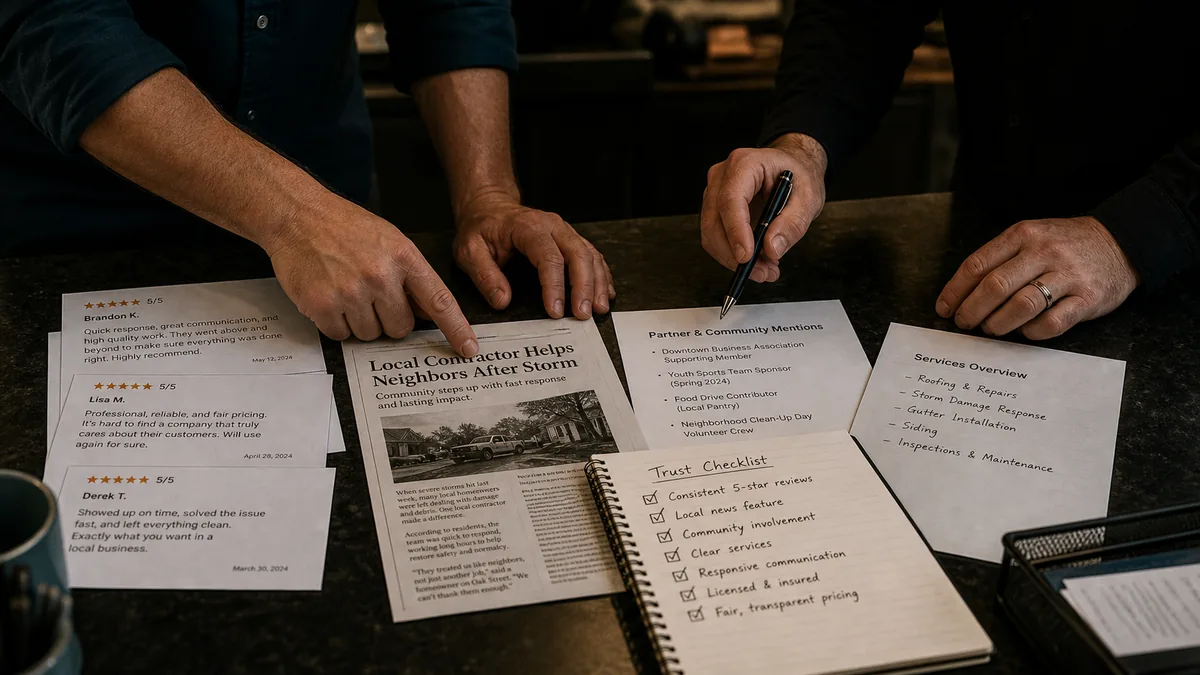
The bigger issue is commercial usefulness. A local roofing company does not just need a link from a random marketing blog. It needs credible source material that supports the decisions buyers actually make: service area, emergency response, insurance handling, storm repair experience, warranties, reviews, photos, safety practices, and whether real people trust the company after the job is done.
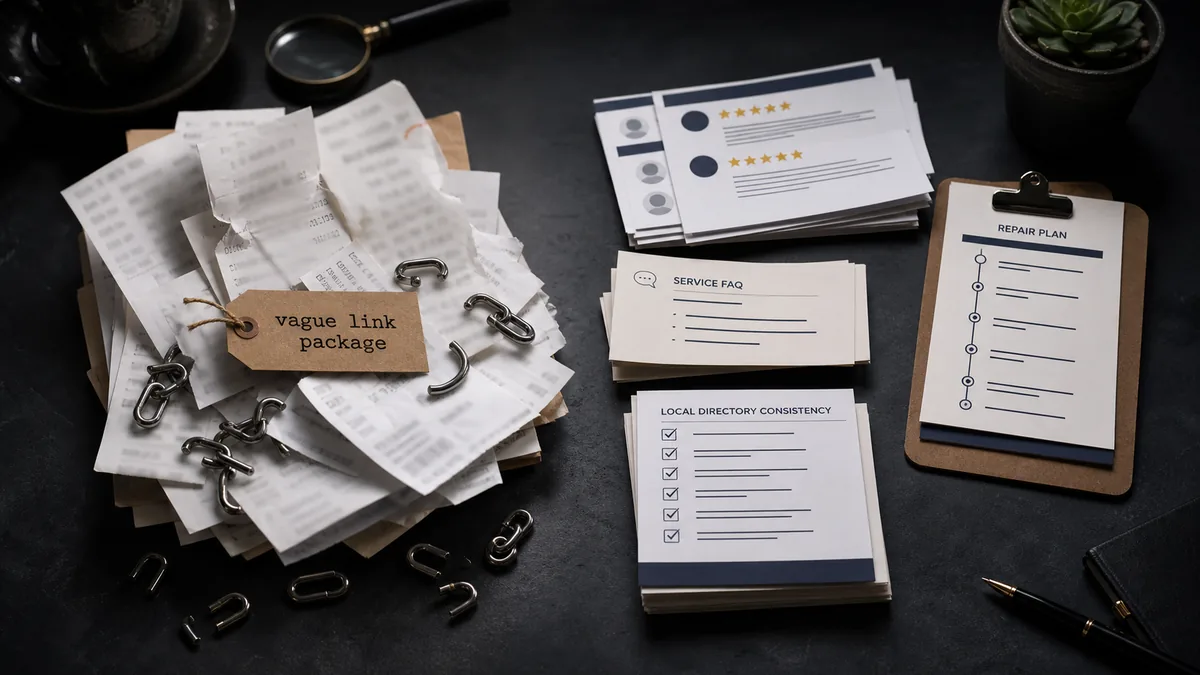
AI systems are not perfect judges of truth. Please do not give them a tiny robe and gavel. But when they synthesize answers, they can pull from public pages, reviews, profiles, articles, forums, and other sources. Vague links provide weak context. Specific proof provides usable context.
What Better Proof Looks Like
Better proof is not necessarily glamorous. It is often boring in a very profitable way.
Third-party mentions that explain why you matter
A local news mention about disaster response, a chamber profile about community work, an industry association listing, a supplier spotlight, a podcast interview, or a partner page can be useful when it says something specific. “Listed among local businesses” is thin. “Helped repair 42 storm-damaged roofs across three neighborhoods after a hail event” is evidence.
Do not invent numbers, awards, or community stories to make this easier. Fake proof is still fake, even if you wrap it in tasteful typography and call it brand authority.
Reviews that describe the buying reason
Reviews are source material, not decoration. A five-star review that says “great job” is pleasant. A review that says the team answered calls quickly, documented insurance photos, protected landscaping, finished on schedule, and explained warranty terms tells a buyer why the company is a safer choice.
That specificity also gives AI systems cleaner language for what the business is known for. It does not guarantee a citation. It does make the public evidence less mushy, which is a technical term in spirit if not in documentation.
Site content that matches the external proof
Google’s guidance for AI features points owners back to the same fundamentals used for Search: create helpful, reliable, people-first content that Google can access and use (https://developers.google.com/search/docs/appearance/ai-features). Helpful content guidance also emphasizes producing useful information for people rather than search-first material (https://developers.google.com/search/docs/fundamentals/creating-helpful-content).
That means your own site needs to confirm what outside sources suggest. If reviews praise emergency response but your service page never explains emergency availability, that evidence is not connected. If a partner mention says you specialize in commercial jobs but your site only talks in vague “solutions,” the story is blurry.
The Recommendation Readiness Test
Use this test before paying for another link package.
- Pick one profitable service or offer.
- List the buyer questions that must be answered before someone calls, books, or requests a quote.
- Identify which sources currently answer those questions: your site, reviews, profiles, directories, articles, associations, partners, case examples, or videos.
- Mark which answers are specific, vague, outdated, conflicting, or missing.
- Compare your source layer against two competitors that AI tools or search results already mention.
- Fix the clearest proof gaps before chasing more raw links.
The owner goal is not to become famous to crawlers. The goal is to make the buying case obvious across the places customers and AI systems inspect. That is how link work becomes business work instead of a monthly ritual where everyone admires a spreadsheet and quietly wonders what happened to the leads.
Where Links Still Fit
Links are not dead. The phrase “dead” gets used in marketing when someone wants attention and has misplaced nuance. Links can still help with discovery, authority, referral traffic, indexing, and the broader reputation graph around a business.
The problem is treating every link as equal because a tool assigned a number to the domain. A helpful mention from a relevant trade publication, local organization, supplier, association, community partner, or trusted niche site may carry more practical value than a random high-metric placement with no customer relevance.
Bing’s Webmaster Guidelines also emphasize useful, discoverable, high-quality content and discourage manipulative practices (https://www.bing.com/webmasters/help/webmaster-guidelines-30fba23a). The search engines have been saying some version of this for years. AI search did not abolish the principle. It made the lazy version easier to spot.
Structured data can help clarify business facts when it matches real page content. Schema.org includes vocabularies such as Organization and LocalBusiness that can describe a business and its public details (https://schema.org/Organization, https://schema.org/LocalBusiness). Useful? Yes. A substitute for proof? No. Schema on thin content is a name tag on an empty chair.
What Owners Should Ask an Agency
If an agency is pitching AI search link building, ask better questions before signing.
- Which buyer decision is this source supposed to influence?
- Why is this publication, directory, partner, or mention relevant to our customers?
- What specific claim about our business will the source support?
- Will this create referral value, citation value, local trust, topical authority, or only a metric?
- How will the work connect to service pages, reviews, schema, profiles, and conversion paths?
- What link tactics are you avoiding because they create spam or reputation risk?
Good answers will be concrete. Weak answers will hide behind authority scores, proprietary magic, and “AI optimization signals,” which is often consultant soup served in a very small bowl.
The Bottom Line
AI search link building should produce credible, useful, source-level proof around your business. Not just more links. Not just prettier reports. Not another expensive pile of placements that no buyer would trust and no assistant can explain.
Start with the service you want more customers for. Build or repair the evidence around that service. Make sure your own site, reviews, profiles, and third-party sources tell the same specific story. Then links become part of a recommendation system, not a numbers game with better lighting.
Nugentive’s paid $297 detailed AI Visibility Audit looks at this exact chain: whether your business is retrievable, understandable, trusted, cited, and ready to turn attention into customer action. The fix is rarely “buy ten more links.” Usually it is “make the proof obvious enough that a buyer, search engine, or AI assistant can understand why you are the right choice.” Annoyingly practical. Usually correct.