Your Next Sale May Be Won Before the Website Visit
AI chatbot purchase decisions now work in both directions. An assistant can introduce a customer to a product, service, or local company. It can also surface a concern and end the purchase before the business gets a chance to explain.
That is the useful lesson from a new Semrush and Exploding Topics survey of 2,338 U.S. adults. Among respondents who used AI, 57.5% said they had decided not to buy something based on information from an AI chatbot. The same research found 57.51% of AI users had made a purchase based on a chatbot recommendation (https://www.semrush.com/blog/ai-chatbots-talk-ai-users-out-of-buying/).
The symmetry matters. AI is not merely a discovery channel that sends a little experimental traffic. For some buyers, it is becoming part of the shortlist, objection, and rejection process. Your website may never record the visitor who asked a chatbot, heard “mixed reviews” or “unclear warranty,” and quietly chose someone else. Very efficient. Also impossible to recover with a prettier button.
What the Survey Does and Does Not Prove
The study was conducted in July 2026 with U.S. adults. Semrush reports a margin of error of plus or minus two percentage points for full-sample figures, while filtered groups have wider margins. The denominator also changes across some segments. The numbers are useful evidence of behavior, not a universal law.
The survey does not prove that chatbots caused 57.5% of all consumers to abandon a purchase. That figure applies to AI users who said they had done so at least once. It does not tell an individual owner how often the behavior occurs in their exact market, which assistant was used, whether the answer was accurate, or how much revenue changed hands.
Still, several findings deserve attention. The report says 47.54% of all respondents sometimes consult a chatbot for seller information before buying. Among people who use AI for company or seller research, 87.41% said they would at least occasionally consult AI before hiring a local business. And 74.15% of all respondents said they would be at least somewhat less likely to buy if a chatbot flagged mixed or negative reviews.
These are self-reported results from a company that sells marketing software, so healthy skepticism belongs in the room. The practical response is to test the buyer questions that matter in your business and inspect the evidence behind the answers.
Why Customers Let AI Influence the Decision
A buyer usually turns to an assistant because the decision has work attached to it. They want options, tradeoffs, warnings, prices, compatibility, service-area details, or a fast summary of reviews. The chatbot compresses that research into a conversation.
That compression can make small information problems expensive. A vague return policy, repeated complaint, or missing compatibility detail can make another option easier to recommend. The AI does not need to dislike your company. It only needs clearer evidence for the alternative.
This is why “we rank on Google” is not a complete answer. The buyer still has to understand the offer, trust the evidence, and see enough detail to decide.
Find the Questions That Can Kill a Sale
Do not test your company name once, receive a pleasant paragraph, and frame the screenshot. Start with the questions a cautious customer asks before spending money.
For a local service business, that may include:
- Who is best for this specific job in my area?
- Which company handles the difficult version of the problem?
- What complaints appear repeatedly in reviews?
- Who offers emergency service, financing, warranties, or follow-up support?
- What should this service cost, and what changes the price?
- Which provider has proof of licenses, experience, or relevant results?
For a product business, test fit, total cost, shipping, returns, warranty, safety, durability, compatibility, and comparisons. Use realistic customer language. “Tell me about Brand X” is a brand prompt. “Which compact espresso machine fits under a 15-inch cabinet and has locally available parts?” is a decision prompt.
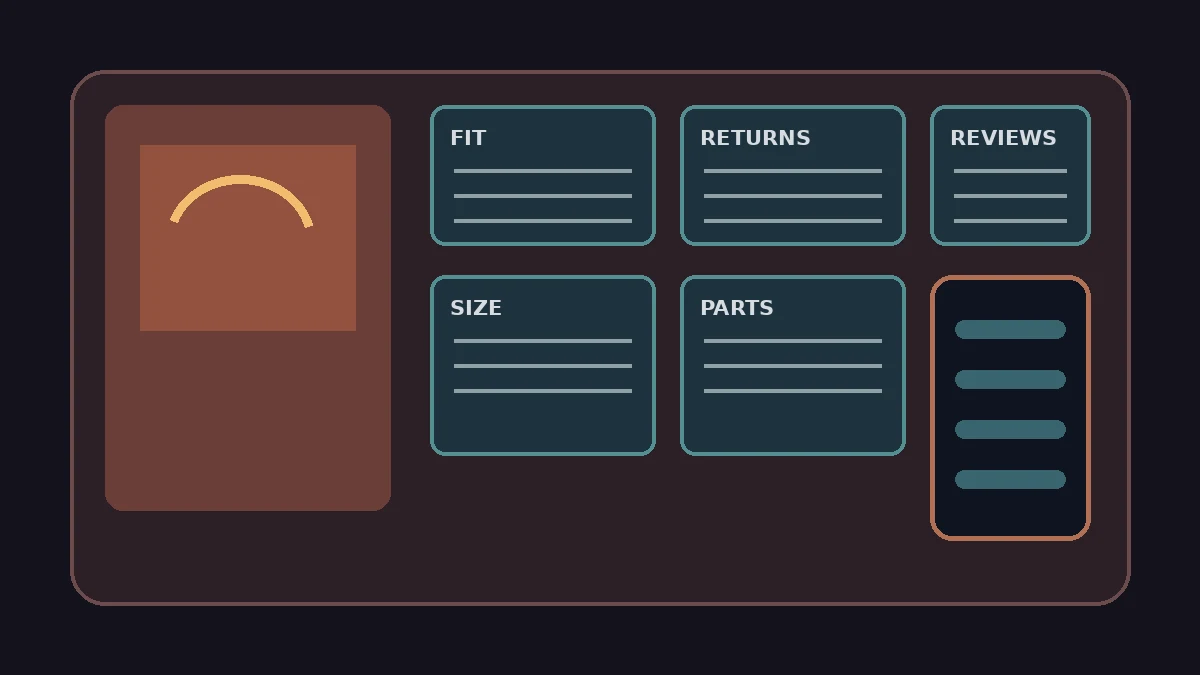
Record the answer, date, platform, claims, sources, competitors, and unresolved objections. Repeat a controlled set of prompts over time. One answer is an anecdote. A repeatable test set is measurement.
Build the Evidence a Buyer Needs
You cannot dictate what every chatbot says. You can improve the public evidence available to customers and retrieval systems.
Make decision details explicit
Put important facts on the page where the decision happens. State who the offer is for, who it is not for, location or delivery limits, process, pricing logic, turnaround, compatibility, warranty, returns, and the next step. Burying the warranty in a PDF named final-v7-revised is technically a choice. It is not a generous one.
For products, Google explains that Product structured data can make details such as ratings, price, availability, shipping, and returns eligible for richer search appearances (https://developers.google.com/search/docs/appearance/structured-data/product). Google Merchant Center also maintains a detailed product-data specification for the attributes merchants submit (https://support.google.com/merchants/answer/7052112). Use structured fields where appropriate, but make the same facts clear in visible content. Schema should describe the offer, not invent one.
Answer objections with proof
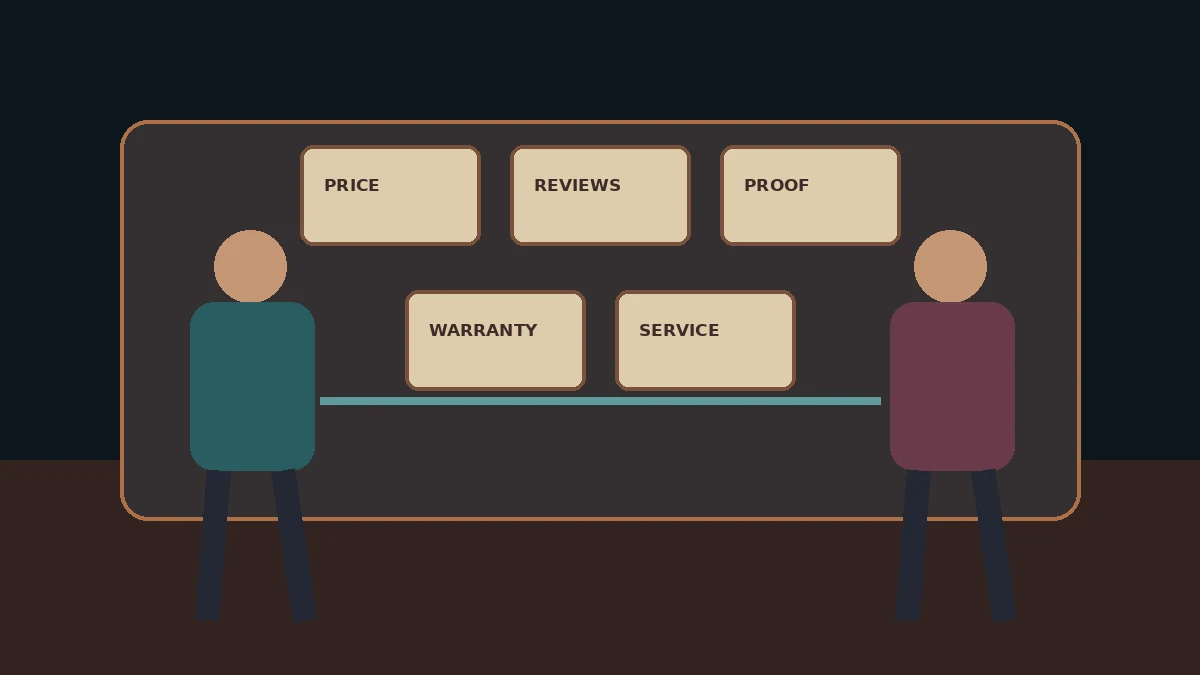
List the concerns that stop sales and match each one with evidence. A claim about fast response needs a service standard or recent review pattern. A durability claim needs specifications, test information, warranty terms, or credible third-party support. A “best for beginners” claim needs clear fit criteria, not enthusiasm wearing a name badge.
Reviews matter because buyers use them to look for patterns. Do not hide legitimate criticism or manufacture praise. Respond to real complaints, correct operational problems, and make current policies easy to verify. If an old issue has been fixed, explain what changed and when.
Keep high-stakes facts consistent
Check prices, availability, addresses, hours, service areas, model names, policies, credentials, and contact details across the website and important third-party profiles. This complements lane 01's broader brand-consistency article but owns a different question: not how to reconcile the company identity, but how to supply the decision evidence that prevents avoidable rejection.
Google's guidance for AI features says the same foundational SEO practices remain relevant and that no special AI schema or machine-readable file is required to appear in AI Overviews or AI Mode (https://developers.google.com/search/docs/appearance/ai-features). Useful content, crawl access, internal links, page experience, and accurate structured data still matter. There is no secret “please recommend us” field. Software developers have once again declined to include the button everyone wants.
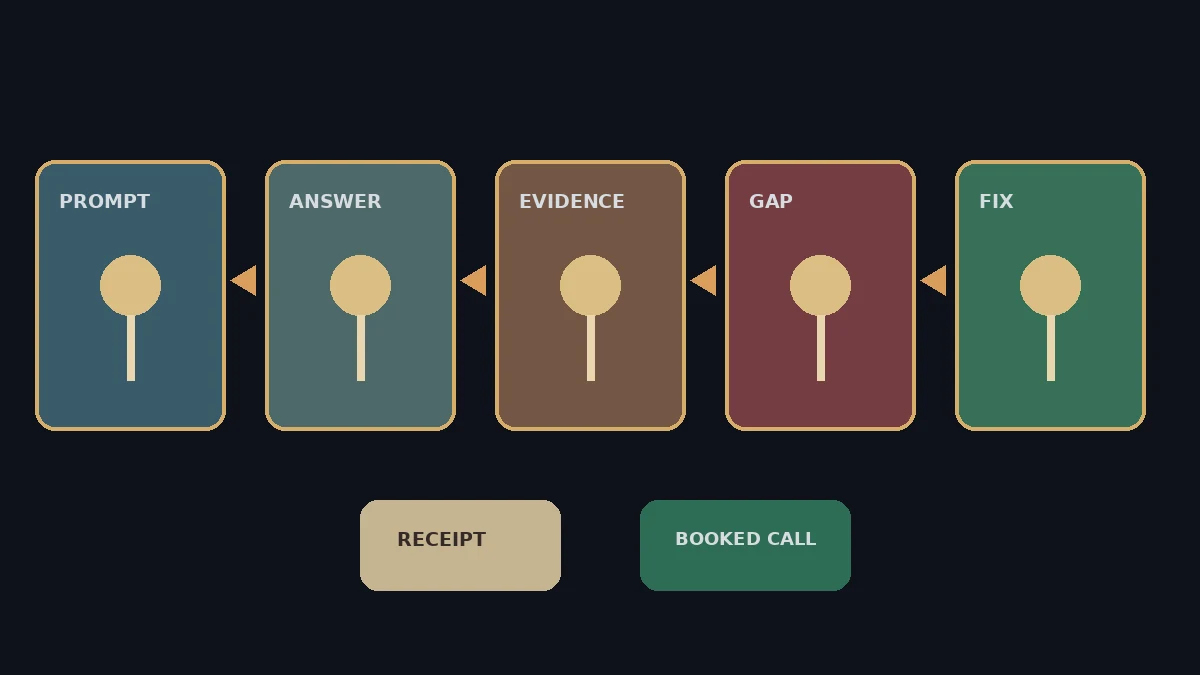
Use a Five-Part Purchase-Decision Audit
Run this check on the offers most closely tied to revenue:
- Prompt: What exact question does the customer ask before choosing, delaying, or rejecting the offer?
- Answer: What do major AI assistants say, and where do they disagree or express uncertainty?
- Evidence: Which pages, reviews, listings, specifications, or third-party sources support the claims?
- Gap: What important fact is missing, vague, stale, contradictory, or trapped in an inaccessible format?
- Fix: Which page, profile, policy, proof asset, or operational problem should be corrected first?
Prioritize by commercial impact. A missing dimension that creates costly returns may matter more than a broad brand mention. A wrong service-area answer may be more urgent than a weak citation count. An unanswered pricing objection can matter more than appearing for a dozen informational prompts that never produce a qualified customer.
Measure Outcomes, Not Reassuring Mentions
Track mentions and citations, but do not stop there. Watch branded search, referral traffic, assisted conversions, sales-call questions, returns, lost-deal reasons, review themes, and qualified inquiries. Ask new customers how they researched. Attribution will be imperfect because customers enjoy using five channels and remembering two.
The goal is not to force positive answers. It is to reduce preventable uncertainty. Some buyers should not purchase because the offer is a poor fit. Honest disqualification saves refunds, callbacks, and unhappy reviews.
AI chatbot purchase decisions vary by audience and category, and no optimization can guarantee a recommendation. Test real buying questions, trace the sources, strengthen the proof, and measure what happens near the sale.
If you need a prioritized view of the prompts, sources, and missing evidence most likely to affect customer decisions, a paid AI Visibility Audit can show what to fix first. The useful outcome is not another visibility score. It is fewer good customers disappearing before you know they were considering you.